Portsmouth, NH
Body Alignment Massage in
Portsmouth, NH
Whole-body work for a body that has stopped moving evenly. We find where one side is doing more than its share, and give the rest of you a chance to catch up.
Why clients choose it
Move evenly again.
Five reasons people in Portsmouth book body alignment massage when one side has been carrying the other for too long.
Freer movement
Range returns as overworked areas are relieved of their extra load.
Muscular balance
Addresses both the side doing too much and the side doing too little.
Whole-body view
Treats the pattern across your body, not one complaining region.
Lasting wellness
Balance holds better than relief, because nothing is left overloaded.
Personalized therapy
Built around how your body actually moves, not a fixed routine.
The education
What is body alignment massage?
Body alignment massage is whole-body therapeutic work aimed at restoring muscular balance and easy movement. Rather than treating the area that hurts, it looks at how the two halves and the several regions of your body are sharing the work of moving you around, and addresses the places where that sharing has become uneven.
The word alignment is worth unpacking, since it can suggest something more mystical than what happens here. Nothing is put back into place, because nothing has gone out of place. What is addressed is the distribution of muscular work across your body, which drifts uneven over time and can be brought closer to even again through skilled soft tissue work and a bit of retraining.
Imbalance is remarkably ordinary. Almost everyone carries a bag on one shoulder, sleeps predominantly on one side, sits with the same leg crossed, and turns the same direction at work all day. Add an old injury that changed how you loaded one leg for six weeks, and the compensation frequently outlasts the injury by years. None of these are dramatic on their own. Together they produce a body where one side works noticeably harder than the other.
There is also a quiet feedback loop at work. A region that is doing extra becomes tighter, and a tighter region is less able to move, which means it hands over more of its job to somewhere else. Left alone, the imbalance slowly deepens rather than settling. That is why patterns which have been building for years rarely resolve on their own, and why they respond well to being addressed directly.
The consequence is usually not pain at first but effort. Movements that used to be free take slightly more. One shoulder is tighter every single time. A hip does not open as far on one side. Eventually the overworked region starts complaining, which is when most people book a massage, and treating only that region gives a few good days before the same load returns it to where it was.
This work approaches it from the other direction. Your therapist assesses how you move, identifies which regions are overworking and which have gone quiet, and treats the whole pattern: releasing what is tight and overloaded, and waking up what has been letting the rest of you compensate for it.
Balance is a whole-body property
The most useful principle in this work is that the body distributes effort, and it will always find a way to accomplish a movement even when part of the system is unavailable. That adaptability is a genuine strength, and it is also how compensations become permanent: nothing hurts enough to force a change, so the workaround simply becomes how you move.
This is why body alignment sessions travel. If your right shoulder is chronically tight, your therapist is interested in your left hip, because the diagonal relationships across the torso are how the body transfers load when you walk. Clients regularly find their most productive session spent somewhere they had never thought about, and the shoulder they came in for finally settles as a result.
How this differs from a general massage
A classic massage covers the whole body attentively and evenly, which is exactly what it should do. Body alignment work covers the whole body deliberately unevenly, spending time in proportion to what the assessment found rather than distributing minutes fairly. Some regions get considerable attention and others get very little, and your therapist will tell you why.
It also asks something of you. You will be asked to move during parts of the session, to notice differences between sides, and to report what you feel. This involvement is not incidental; the nervous system updates its map of what is available largely through movement, and a change felt actively tends to survive far longer than one received passively.
Structural or body alignment?
These two services overlap and clients often ask which to book. The simplest distinction is the question each one starts from. Structural alignment massage asks how you stand, treating posture and the framework holding you upright. Body alignment massage asks how you move, treating muscular balance and freedom through the whole body.
In practice, if your concern is a posture you dislike in photographs or a sense of being compressed and slumped, structural is the better fit. If your concern is that movement has become uneven, that one side is always the tight one, or that you no longer move as freely as you did, book this one. If you are unsure, book body alignment; it is the broader of the two and your therapist will tell you afterward if the postural work would serve you better next time.
Behind the work
How does a session work?
Your therapist begins with questions and observation. What you do all day, which side you carry things on, how you sleep, what injuries you have had, and where things feel restricted rather than only where they hurt. Then they will watch you move through a few simple ranges, comparing sides, which usually makes the pattern obvious quickly.
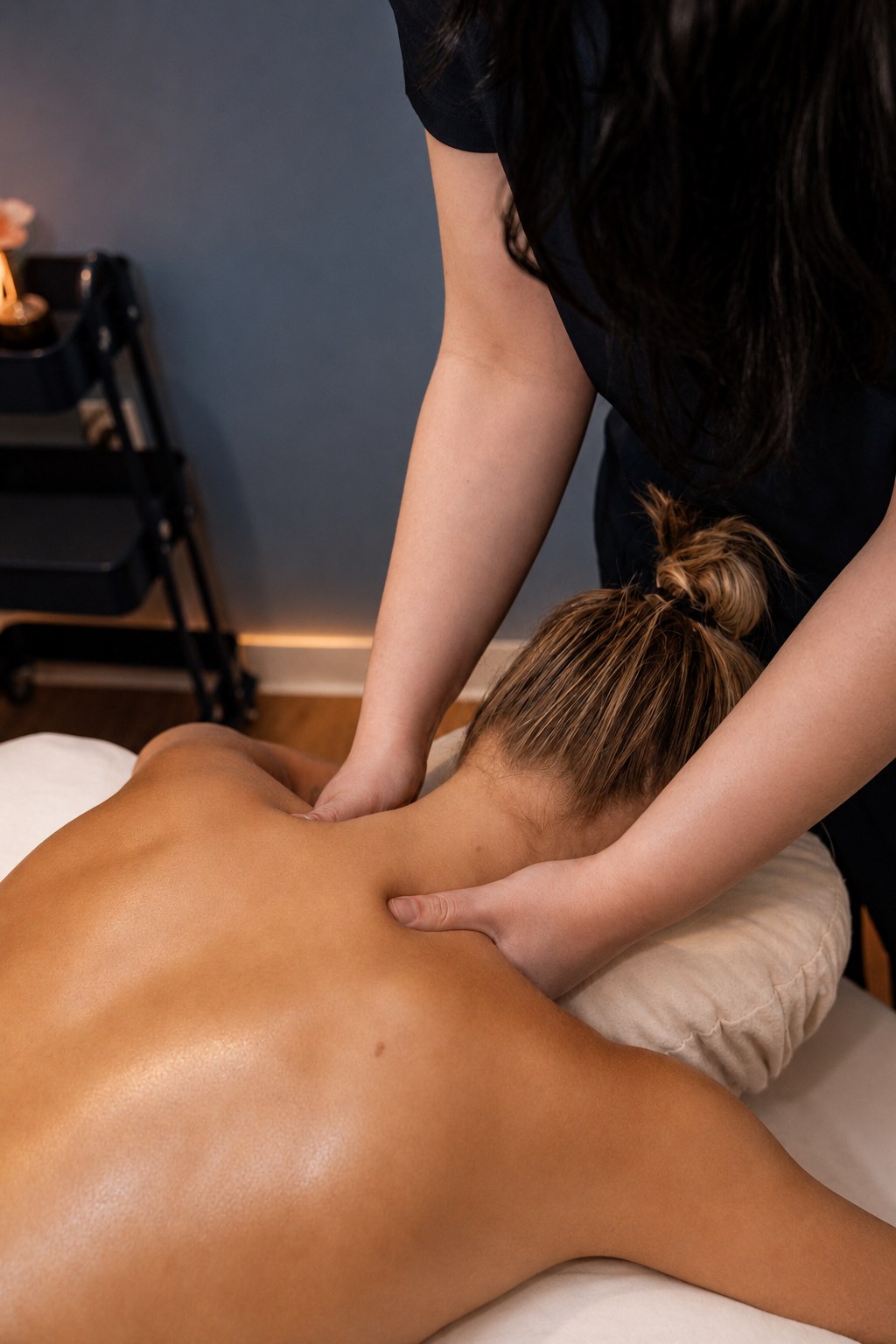
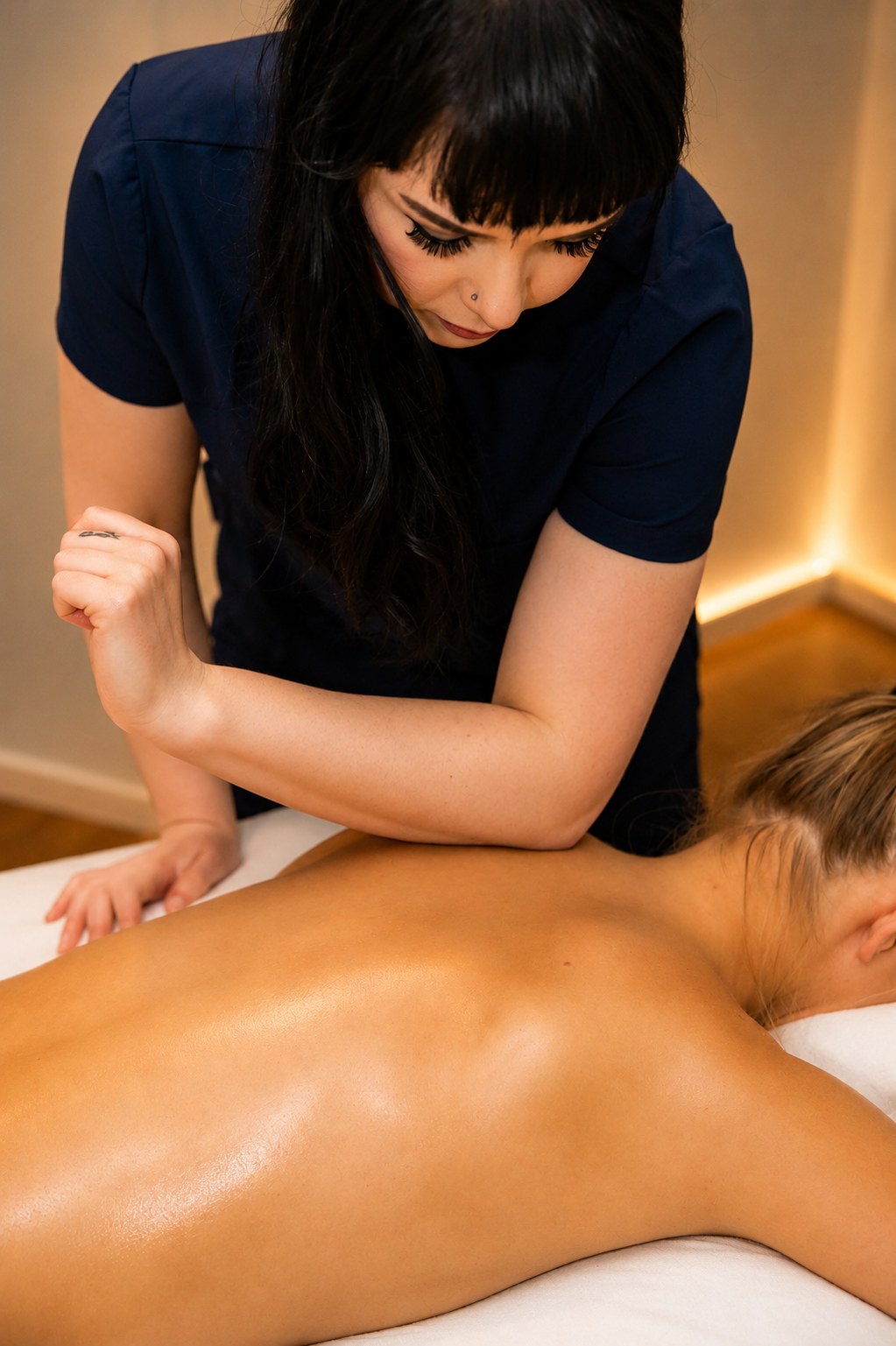
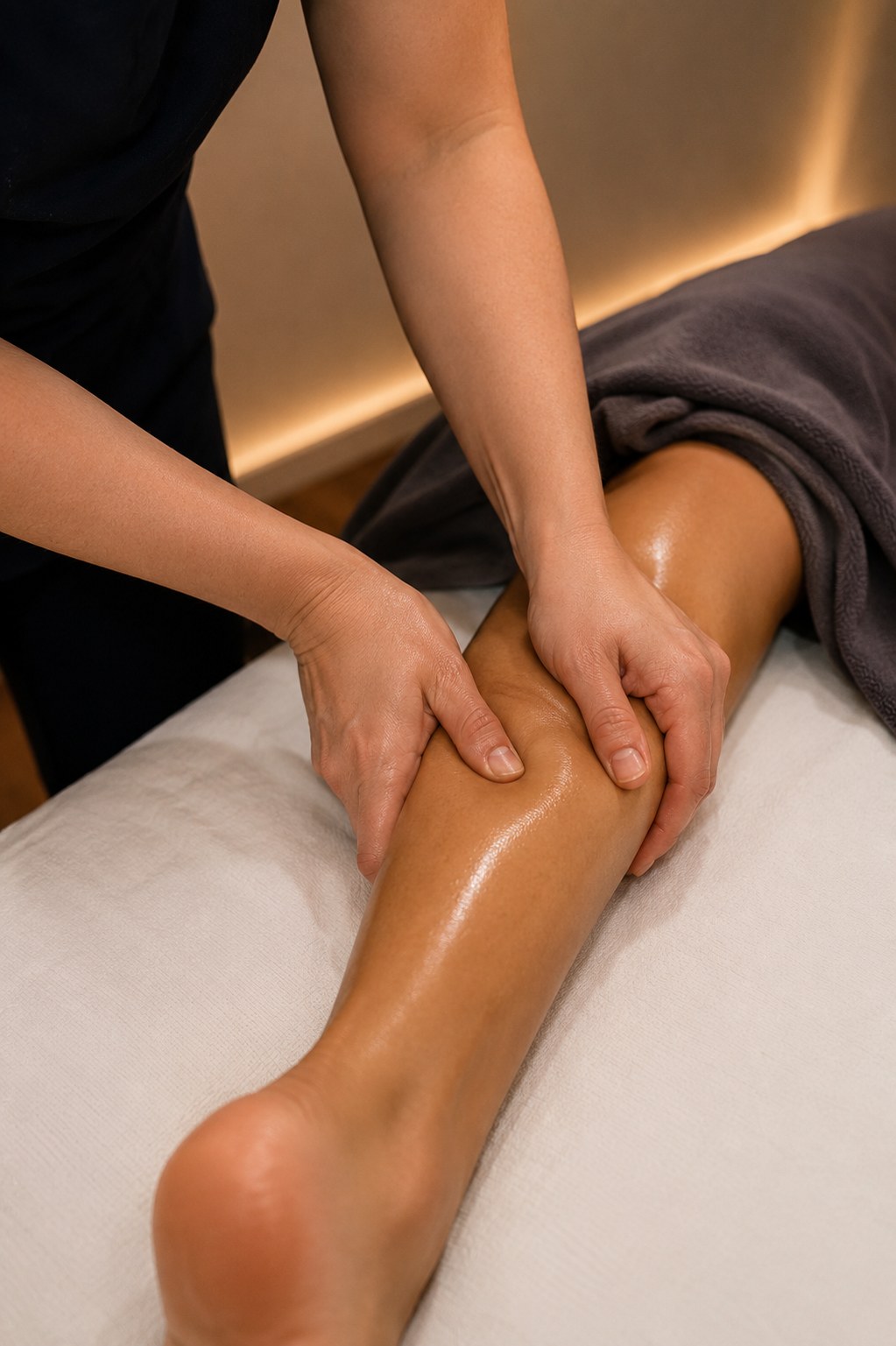
On the table, time is allocated according to what was found. Overworked regions are released with sustained moderate pressure. Restricted areas are freed with slower fascial-style work. Regions that have gone quiet receive stimulating technique and active movement to bring them back into the conversation. The session may cover a great deal of ground or concentrate heavily in two or three areas, depending on your pattern.
You will be asked to participate. Small active movements while pressure is applied, comparisons between one side and the other, and honest reporting of what you notice. Clients sometimes expect to lie passively and are surprised, but this involvement is a large part of why the change tends to hold.
At the end, your therapist reassesses briefly so you can feel the difference yourself, and gives you two or three simple things to do during the week. Small and specific, because long programmes do not get done.
That closing reassessment is worth more than it might sound. Turning your head and finding it goes further on the side that was stuck, or standing up and noticing your weight sits evenly for the first time in months, is considerably more convincing than being told the session went well. It also gives you a reference point for the next visit, so progress is something you can feel rather than take on trust.
Where it helps
What clients bring to this work.
Body alignment massage is wellness care rather than medical treatment, and we make no medical claims. These are the everyday reasons clients seek it.
- One side always tighter. The single most common description we hear, and the clearest sign of imbalance.
- Movement that feels restricted. Often sought when reaching, turning, or twisting has quietly become less free.
- Recurring tension in one spot. Frequently booked when the same area returns to tightness after every massage.
- Old injury compensations. Many clients find the pattern traces to something that healed years ago.
- Uneven wear. Commonly noticed through shoe wear, one sore hip, or a favoured side when standing.
- General stiffness. A frequent request from clients who simply feel less mobile than they used to.
If you have a diagnosed condition, a recent injury, or are working with a physical therapist or physician, tell us at booking. Our therapists work alongside other providers and will defer to their guidance.
Your visit
What happens during your appointment?
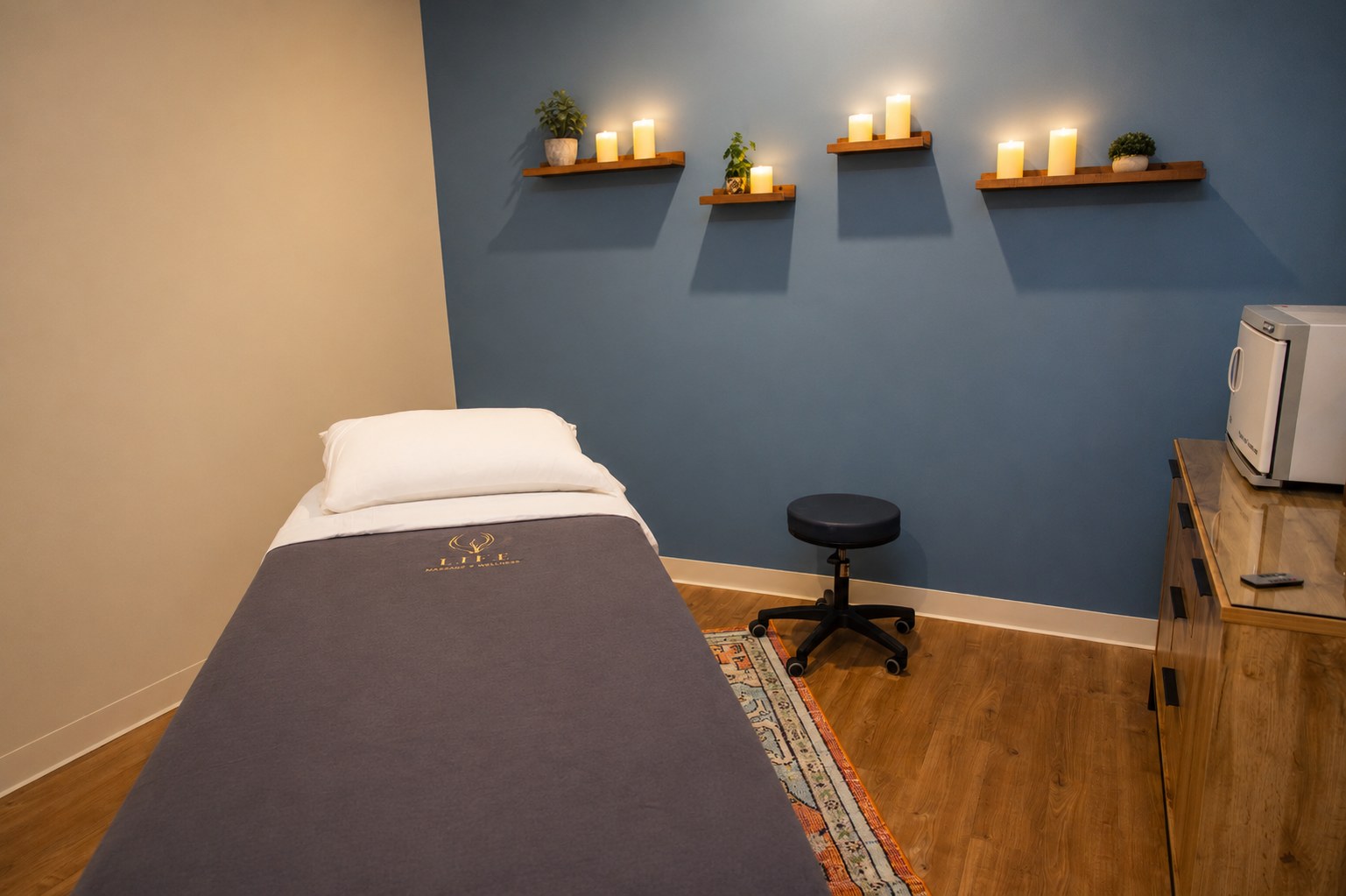
Assessment-led work should be transparent throughout. Here is how a session runs at our Portsmouth studio.
01
Assess
We talk through your history and habits, then watch you move through a few simple ranges, comparing sides. Arrive about ten minutes early and wear something you can move in.
02
Explain
Your therapist tells you what they found before treating anything. Most clients find this the most interesting part, and it makes the rest of the session make sense.
03
Rebalance
Sixty or ninety minutes distributed according to the assessment: releasing what is overloaded, freeing what is restricted, and waking what has gone quiet.
04
Reassess
We check the same movements at the end so you can feel the difference, then send you home with two or three simple things for the week.
Ninety minutes suits this work considerably better than sixty, since a whole-body pattern usually involves three or four regions and a shorter session forces your therapist to choose. If sixty is what you have, they will prioritize honestly and tell you what was left for next time. Wear or bring something you can move in comfortably, since the assessment happens standing before you get on the table.
Why here
Why choose Life Massage & Wellness in Portsmouth?
This work depends on a therapist who assesses before treating and explains what they found, and that is how our Portsmouth team works. Most clients tell us it is the first time anyone has connected their tight shoulder to anything other than their shoulder, and that explanation is genuinely half the value of the session.
Our studio at 95 Brewery Ln, Unit #17 is minutes from downtown Portsmouth with free parking right at the door, and we are open seven days a week with evening hours. Appointments are scheduled with enough room that assessment does not eat into treatment time, which matters when the looking is a real part of the work.
We also keep notes and will happily book you with the same therapist each visit, which is worth more here than in most services. Half the benefit of ongoing alignment work comes from someone remembering what your left hip was doing two months ago, and being able to tell you honestly whether it has changed.
Clients come to us from across Portsmouth and from Rye, Greenland, Newington, Dover, Newmarket, and Kittery. If you are choosing between this and our structural alignment sessions, call and describe what you have been noticing; we would rather spend five minutes matching you correctly than book you into the wrong hour.
This is also the session we most often recommend to people who have tried general massage repeatedly and found it pleasant but temporary. If the same shoulder has been the bad shoulder for three years despite regular treatment, the reason is usually that nothing has addressed why it keeps getting overloaded. That is exactly the question this work starts from.
Keep exploring
Pair it, gift it, or make it a habit.
Related therapeutic work
Balance is cumulative
Compensations rebuild through ordinary life, which makes this a service that rewards regularity. A membership includes one session each month from $105, member rates on every additional visit, and hours that roll over for up to six months.
Give easier movement
For the person who says one side is always the bad side. A gift card covers any service at either studio, in any amount, purchased online in a couple of minutes.
Good to know
Body alignment questions, answered.
What is the difference between body alignment and structural alignment massage?
They start from different questions. Structural alignment asks how you stand, addressing posture and the framework holding you upright. Body alignment asks how you move, addressing muscular balance and freedom across the whole body. If your concern is a posture you dislike, book structural. If your concern is that one side is always tighter or that movement has become uneven, book this one.
How is this different from a regular full-body massage?
A classic massage covers the body evenly and attentively, which is exactly right for general tension. Body alignment work covers the body deliberately unevenly, spending time in proportion to what an assessment found rather than distributing minutes fairly. Some areas get a great deal of attention and others very little, and your therapist will explain why.
Why would you work on my hip if my shoulder hurts?
Because the body transfers load diagonally across the torso when you walk, so the right shoulder and the left hip are functionally partners. If one is restricted, the other frequently ends up compensating. Clients regularly find their most productive session is spent somewhere they had never associated with their complaint, and the original area settles as a consequence.
Will I have to move during the session?
Yes, in small ways. You will be asked to make gentle active movements while pressure is applied, compare how one side feels against the other, and report what you notice. Clients sometimes expect to lie passively and are surprised, but this involvement is a large part of why the change tends to survive the drive home.
How many sessions will I need?
Most clients feel a difference in the first session, particularly in how evenly they move. Because compensations rebuild through ordinary daily habits, a pattern that has been years in the making usually needs several sessions plus a small amount of weekly attention before the new balance becomes the default. Your therapist will give you a straight assessment after the first visit.
Should I book sixty or ninety minutes?
Ninety, if you can. A whole-body pattern usually involves three or four regions, and sixty minutes forces your therapist to choose between them. If sixty is what your schedule allows, that is genuinely fine; they will prioritize honestly and tell you clearly what was left for the next visit rather than rushing everything.

Ready when you are
Book your body alignment session in Portsmouth.
If one side has been doing more than its share for years, this is the session that finally addresses it. Reserve online in minutes.