
Portsmouth, NH
Structural Alignment Massage in Portsmouth, NH
Posture-focused bodywork for people who have noticed their body no longer stacks the way it used to. We work with the framework itself, not just the muscles complaining about it.
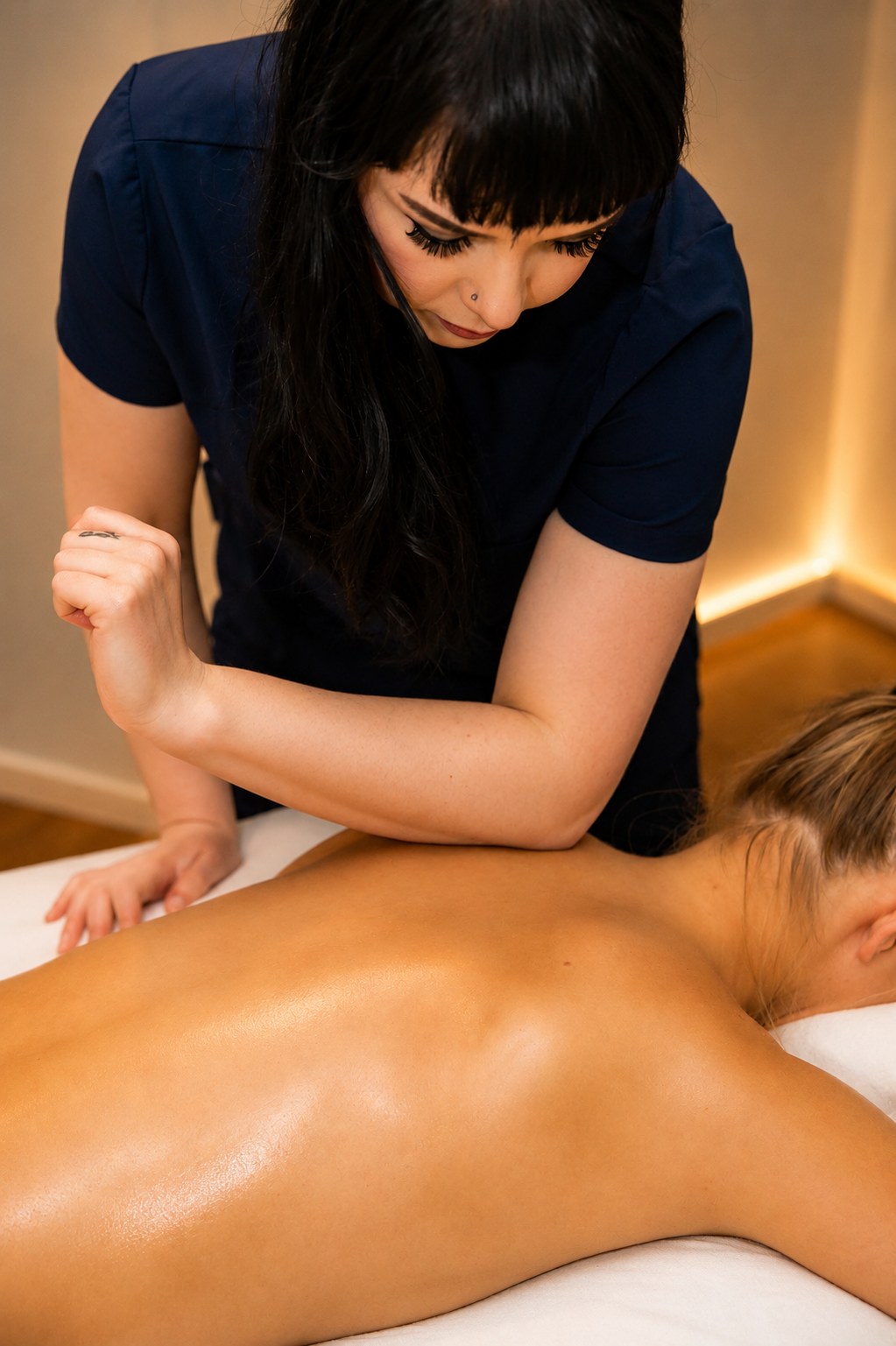
Why clients choose it
Stand taller without thinking about it.
Five reasons people in Portsmouth book structural alignment work when posture has become the problem.
Better posture
Addresses why you slump rather than reminding you not to.
Assessment led
Sessions begin by seeing how you actually stand and move.
Balanced framework
Works with the whole chain instead of one loud joint.
Change that holds
Retraining position so the body keeps what it gains.
Tailored to you
No two postures are the same, so no two sessions are.
The education
What is structural alignment massage?
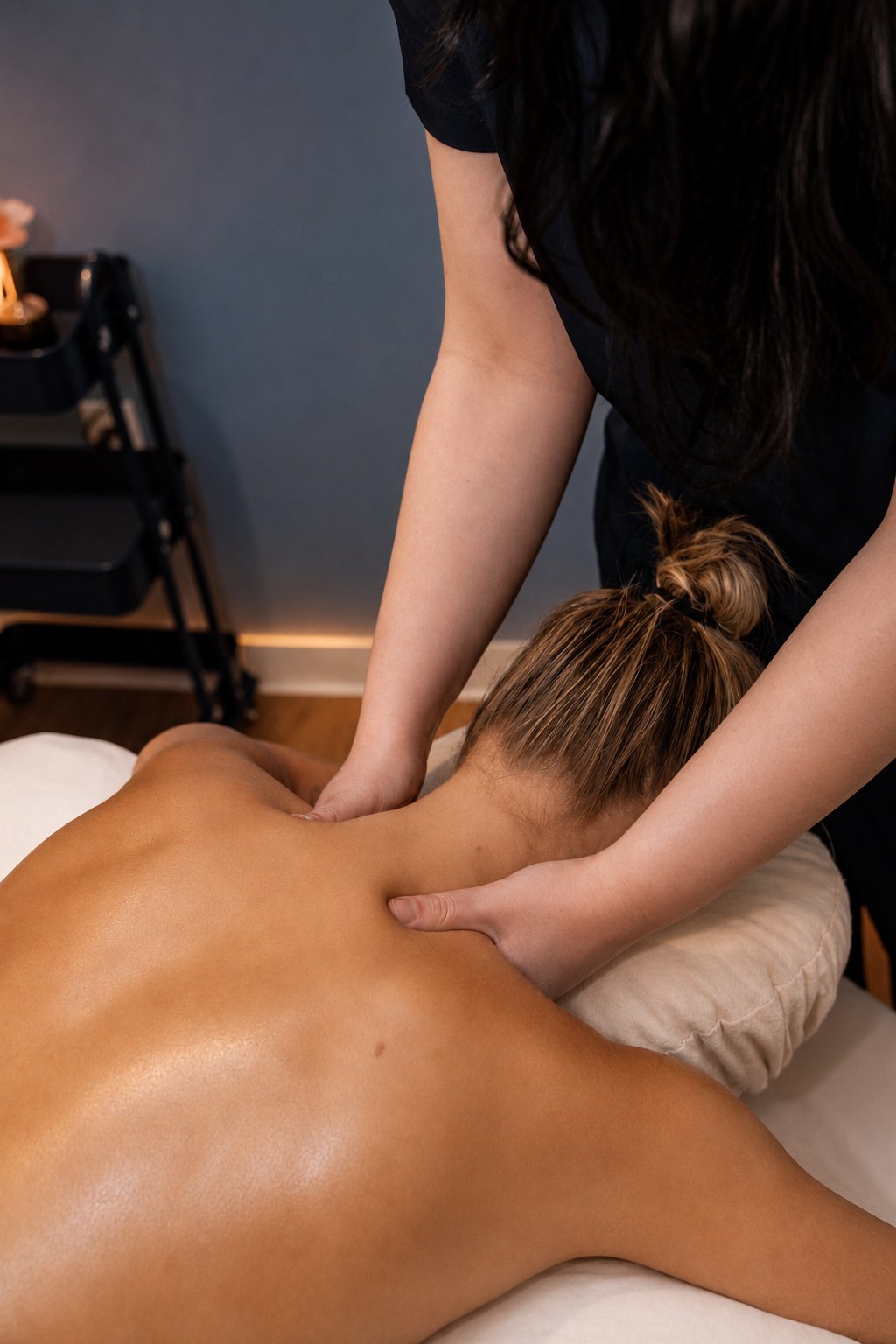
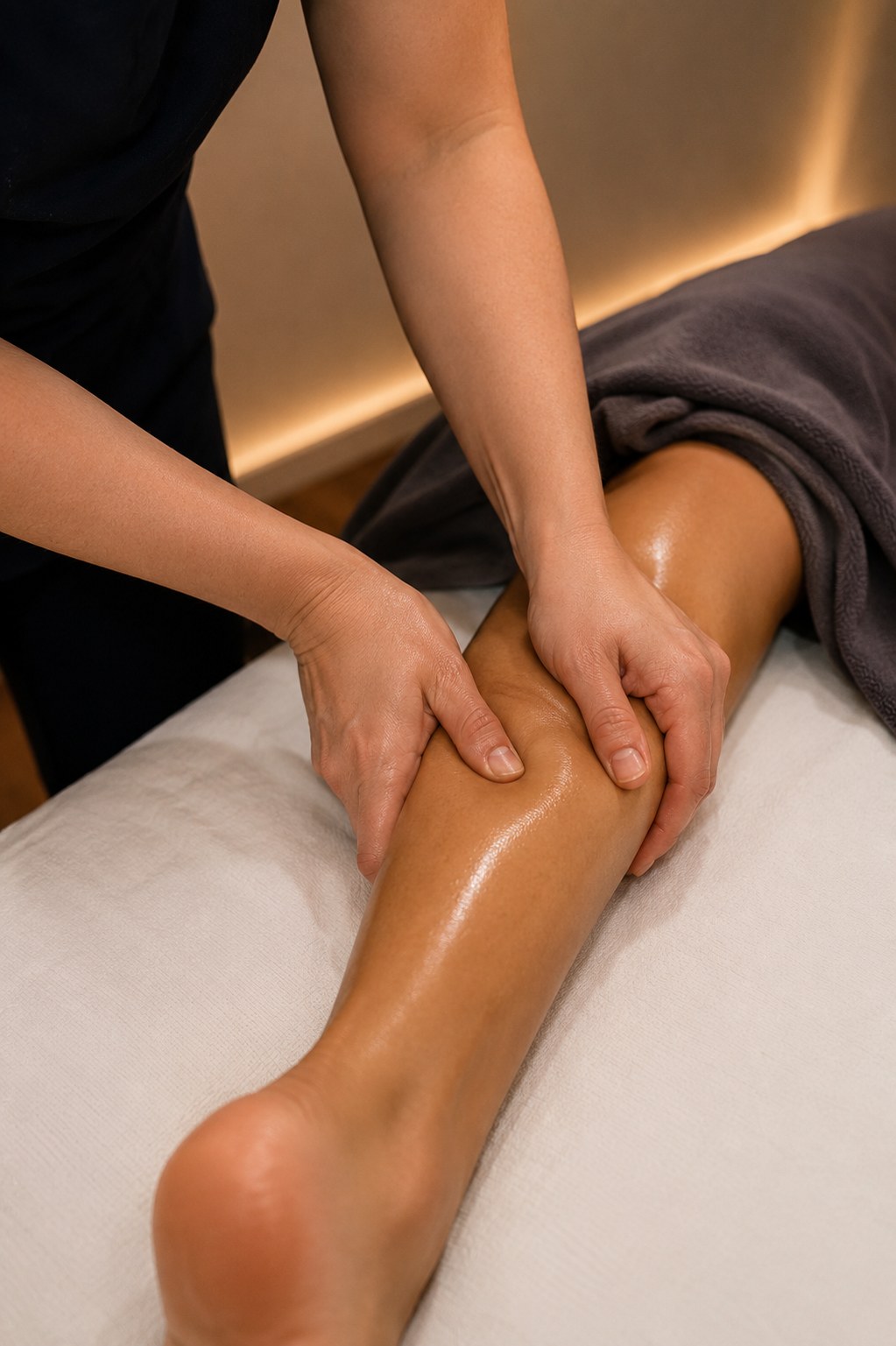
Structural alignment massage is postural bodywork. Rather than treating the area that hurts, it looks at how your body is organized in space and works to bring it closer to easy, upright balance. The premise is straightforward: a body that is stacked well requires very little muscular effort to hold up, and a body that is not spends all day quietly working to stay vertical. That constant low-grade effort is where a great deal of everyday tension actually comes from.
Sessions begin with observation. Your therapist looks at how you stand, where your weight falls, whether one shoulder sits higher, how your head carries over your ribcage, and how those relationships change when you walk or reach. Posture is rarely a single fault; it is a chain of compensations, and the useful question is not which part is wrong but which part started it.
Posture also carries more than mechanics. People compress under stress, under fatigue, and under long stretches of concentration, and a body that has spent two years braced tends to keep the shape even after the reason has passed. That is not a character flaw and it is not something to be told off about; it is simply tissue doing what tissue does. Part of what makes this work satisfying is that it addresses the physical residue directly rather than asking you to think your way out of it.
From there the manual work addresses the soft tissue holding that chain in place. Chronically shortened structures are lengthened, chronically lengthened structures are woken up, and the fascial layers between them are freed so segments can move independently again. The therapist works methodically through the chain rather than concentrating on one region, because releasing a tight chest without addressing the mid-back that has been compensating for it simply produces a body that pulls itself straight back into the old shape.
Why posture is not a discipline problem
Almost everyone has been told to sit up straight, and almost nobody has been helped by it. The reason is that posture is not primarily a matter of willpower. When tissue has adapted to a position over months or years, holding a different position requires continuous conscious effort, and the moment your attention goes elsewhere, which is roughly four seconds later, the body returns to whatever costs it least.
Structural work approaches the problem from the other end. If the tissue that has shortened is lengthened and the tissue that has been overstretched is restored, upright becomes the cheaper option and the body chooses it without supervision. Clients often notice this first in an ordinary moment, catching themselves standing differently in a queue without having decided to.
Reading a postural chain
A useful example is the one we see most often. A head that sits forward of the shoulders is heavy, and the muscles at the base of the skull work continuously to keep it from dropping further. Over months they shorten and thicken. Meanwhile the chest tightens, the upper back lengthens and weakens under constant load, and the ribs lose some of their movement, which quietly restricts the breath.
Treat only the base of the skull and you get a few good days. Treat the chest as well and it lasts longer. Address the mid-back that has been overstretched, restore some movement through the ribs, and give the tissue a reason to hold the new position, and the pattern genuinely begins to change. That is the difference between relief and alignment, and it is why these sessions move around more than clients expect.
Every chain is individual. Yours might begin at an old ankle injury that changed how you load one leg, or at a job that has you turning the same direction eight hours a day. Finding where it starts is the interesting part of the work, and your therapist will tell you what they think they are seeing rather than keeping it to themselves.
What structural alignment is not
This is soft tissue work, not manipulation. There is no thrusting, no cracking, and nothing is forced into position. Structural alignment massage is not chiropractic and does not claim to adjust joints or the spine. What it does is change the soft tissue environment those joints sit in, so the skeleton is free to find a better position on its own terms.
It also is not a single-session fix, and we would rather say so plainly. Postural patterns take years to build and typically need a handful of sessions plus a small amount of daily attention before the new arrangement feels normal. What most clients notice immediately is easier breathing and a sense of length; the durable postural change follows over the following weeks.
Behind the work
How does a session work?
Your therapist starts with a conversation and a look. They will ask about your work, your history of injuries, which side you carry things on, and where your discomfort shows up. Then they will watch you stand and move through a few simple ranges, which usually reveals more in thirty seconds than a long description would.
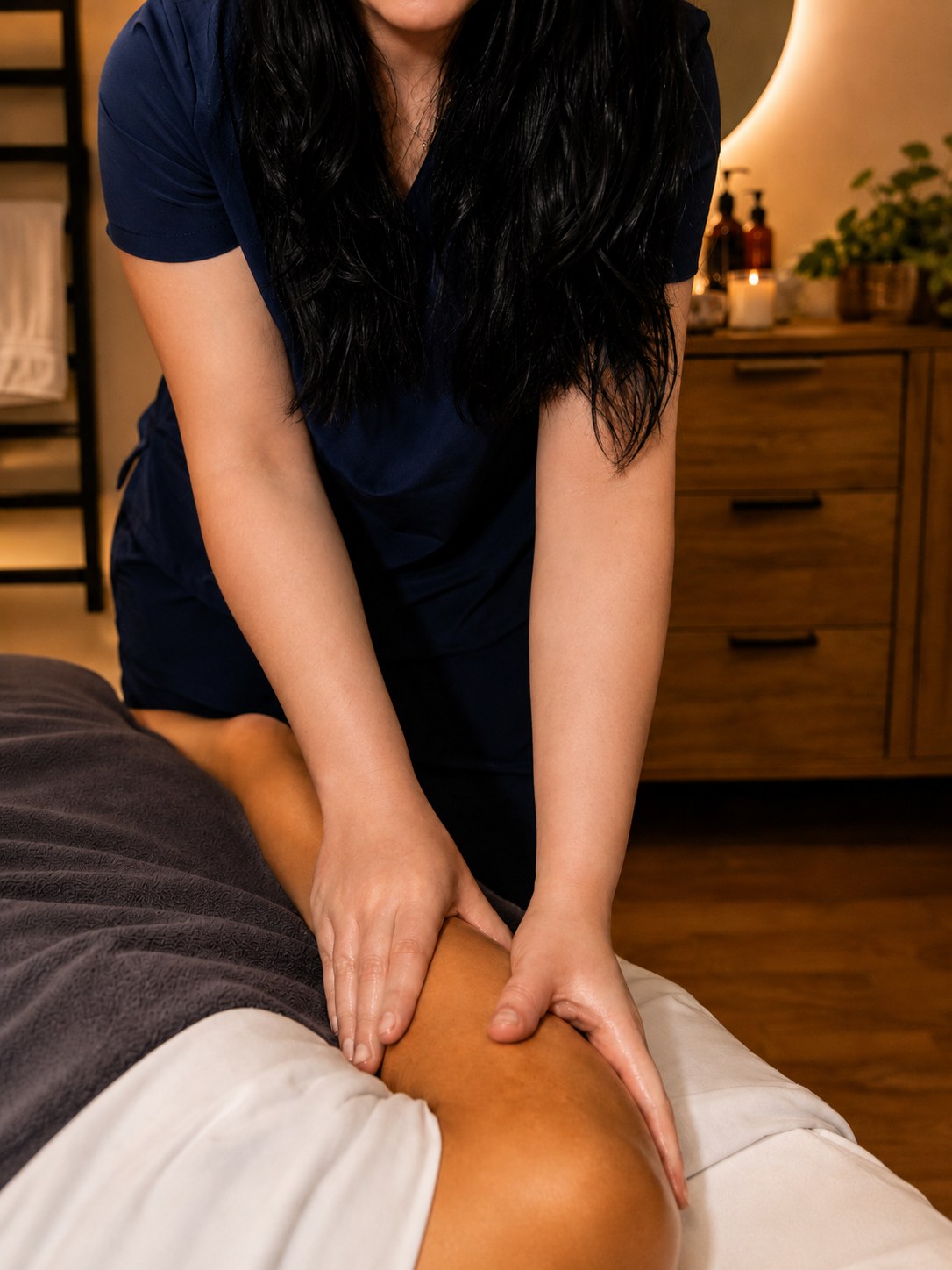
On the table, the session moves through the chain rather than around a single complaint. If your assessment points to a forward head position, the work may travel from the chest and front of the shoulders through the upper back and into the base of the skull, because all of those are involved in holding that position. Pressure is moderate and sustained rather than aggressive, since the goal is to change how tissue rests rather than to overpower it.
You will usually be asked to participate a little. Gentle active movement while pressure is applied helps the nervous system register the new range as available rather than merely possible, and it makes the change more likely to survive the drive home.
Before you leave, your therapist will show you two or three positions to hold or movements to repeat during the week. These take a few minutes a day and they matter considerably, because the hours between sessions are where posture is actually decided.
We also reassess at the end, briefly, so you can feel the change rather than take our word for it. Standing up after a session and noticing that your weight falls differently or that a full breath arrives more easily is more persuasive than any explanation, and it tends to be the moment clients decide whether this work is for them.
Where it helps
What clients bring to this work.
Structural alignment massage is wellness care rather than medical treatment, and we make no medical claims. These are the everyday reasons clients seek it.
- Post-training soreness. Many clients book in the days after long runs, races, and heavy sessions to help tired legs feel lighter.
- Neck and shoulder tension. Often used by swimmers, climbers, and desk athletes whose upper body carries the strain.
- Lower back discomfort. A frequent request from lifters, golfers, and anyone whose sport loads the spine.
- Repetitive strain patterns. May help ease the tightness that builds when one motion repeats for miles or hours.
- Posture-related tightness.Commonly sought for the hip flexors and chest that shorten from sitting between workouts.
- Mobility plateaus. Many clients use regular sessions to support the flexibility their training keeps taking back.
If you have a diagnosed spinal condition, a recent injury, or are under the care of a physical therapist or physician, tell us at booking. Our therapists work alongside other providers and will always defer to their guidance.
Your visit
What happens during your appointment?
Assessment-led work should be transparent from the start. Here is how a session runs at our Portsmouth studio.
01
Observe
We talk through your history and then look at how you stand and move. Arrive about ten minutes early so this is unhurried, because it shapes everything that follows.
02
Explain
Your therapist will tell you what they are seeing before touching anything. Most clients find this part genuinely interesting, and it makes the session make sense.
03
Work the chain
Sixty or ninety minutes moving methodically through the structures holding your pattern, with moderate sustained pressure and some gentle active movement from you.
04
Reassess and equip
We look again at the end so you can feel the difference, then send you home with two or three simple things to do during the week.
Ninety minutes suits this work better than sixty, simply because a postural chain involves several regions and a shorter session forces choices. If you can only do sixty, your therapist will prioritize honestly and tell you what was left for next time. Wear or bring something you can move in comfortably for the assessment portion, since we will want to see you stand and move before you get on the table.
Why here
Why choose Life Massage & Wellness in Portsmouth?
This work depends on a therapist who can look at a body and see the pattern rather than just the complaint, and who will explain what they found. Our Portsmouth therapists assess before they treat and talk you through it as they go, which most clients tell us is the first time anyone has explained why their shoulder does what it does.
Our studio at 95 Brewery Ln, Unit #17 is minutes from downtown Portsmouth with free parking right at the door, and we are open seven days a week with evening hours. Appointments are scheduled with enough room that assessment does not eat into treatment time, which matters in a service where the looking is half the work.
Portsmouth has a lot of people at desks, behind counters, in workshops, and on boats, and every one of those builds a recognizable postural signature. Our team sees them constantly. If your situation would be better served by neuromuscular work on a specific point, or by a course of physical therapy, we will say so rather than booking you in regardless.
Clients come to us from across the city and from Rye, Greenland, Newington, Dover, Newmarket, and Kittery. If you are weighing this against our body alignment sessions, call and describe what you are noticing; the two overlap and we will point you to the right one.
A last practical point. Postural work benefits from continuity with the same therapist, because half the value is in someone remembering what your left shoulder was doing six weeks ago. We keep notes and we will happily book you with the same person each time. Just ask when you call, and if your favourite therapist is unavailable we will tell you rather than quietly reassigning you.
Keep exploring
Pair it, gift it, or make it a habit.
Related therapeutic work
Posture changes with repetition
Structural change is cumulative, which makes this one of the services where a membership genuinely pays off. One session each month from $105, member rates on every additional visit, and hours that roll over for up to six months.
Give a body that stands easier
For the person who has been complaining about their posture for years without ever knowing what could actually be done about it. Any amount, any service, either studio, purchased online in a couple of minutes.
Good to know
Structural alignment questions, answered.
What is the difference between structural alignment massage and body alignment massage?
Structural alignment focuses specifically on posture and the framework: how you stack, where your weight falls, and which tissue is holding you out of easy upright balance. Body alignment massage is broader, working on whole-body muscular balance and freedom of movement without posture being the organizing question. If your concern is how you stand, choose structural. If it is how you move, choose body alignment.
Is structural alignment massage the same as chiropractic?
No. This is soft tissue work with no manipulation, no thrusting, and no joint cracking. We do not adjust the spine and we make no claims to. What we do is change the soft tissue environment around the joints so the skeleton can settle into a better position on its own. Many clients see both a chiropractor and a massage therapist, and the two complement each other well.
How many sessions before my posture actually changes?
Most clients feel longer and breathe more easily after the first session, but that immediate change is largely tissue and sensation. Durable postural change usually takes a handful of sessions across a couple of months, combined with a few minutes of daily attention. Your therapist will be honest about what they expect rather than committing you to a package in advance.
Will I have to do exercises at home?
Two or three simple things, taking a few minutes a day. We keep it deliberately small because long programmes do not get done. The hours between appointments are where posture is genuinely decided, so this modest homework is what turns a good session into a lasting change. Clients who do it need fewer visits, which is exactly the outcome we want.
Can structural alignment massage help with back pain?
Back discomfort is a common reason clients book, particularly the mid-back fatigue that comes from holding yourself upright all day. We make no medical claims and this is not treatment for a diagnosed condition. If your pain is new, severe, or radiating, please see your healthcare provider first, and we are happy to work alongside their guidance afterward.
Ready when you are
Book your structural alignment session in Portsmouth.
Stop reminding yourself to sit up straight and start changing why you cannot. Reserve online in minutes, or call and describe what you have been noticing.