Portsmouth, NH
Reflexology in
Portsmouth, NH
An entire unhurried session for the feet that carry everything, using the mapped pressure techniques of a tradition thousands of years old. Whole-body calm, built patiently from the ground up, with the best sleep of your month thrown in.
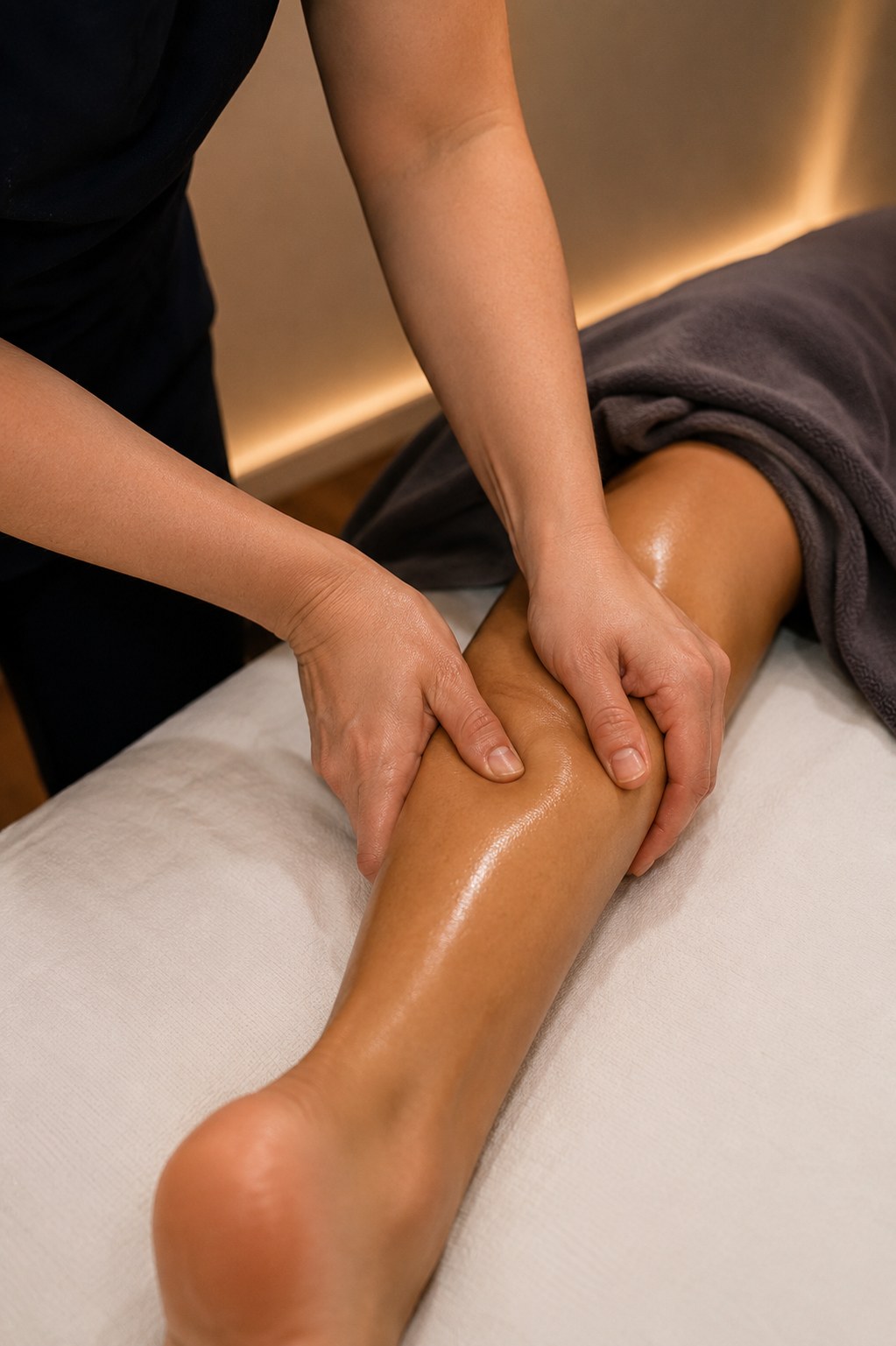
Why clients choose it
Everything relaxes when the feet finally do.
Five reasons reflexology keeps a devoted following in Portsmouth.
Mapped, deliberate work
Systematic technique across every zone of the foot, not a foot rub.
Whole-body calm
Foot work that somehow unwinds everything above it.
Deeply relaxing
Among the most reliably sleep-inducing sessions we offer.
Tired feet, restored
The obvious benefit, delivered thoroughly.
Clothed and comfortable
Only shoes and socks come off; the rest of you rests.
The education
What is reflexology?
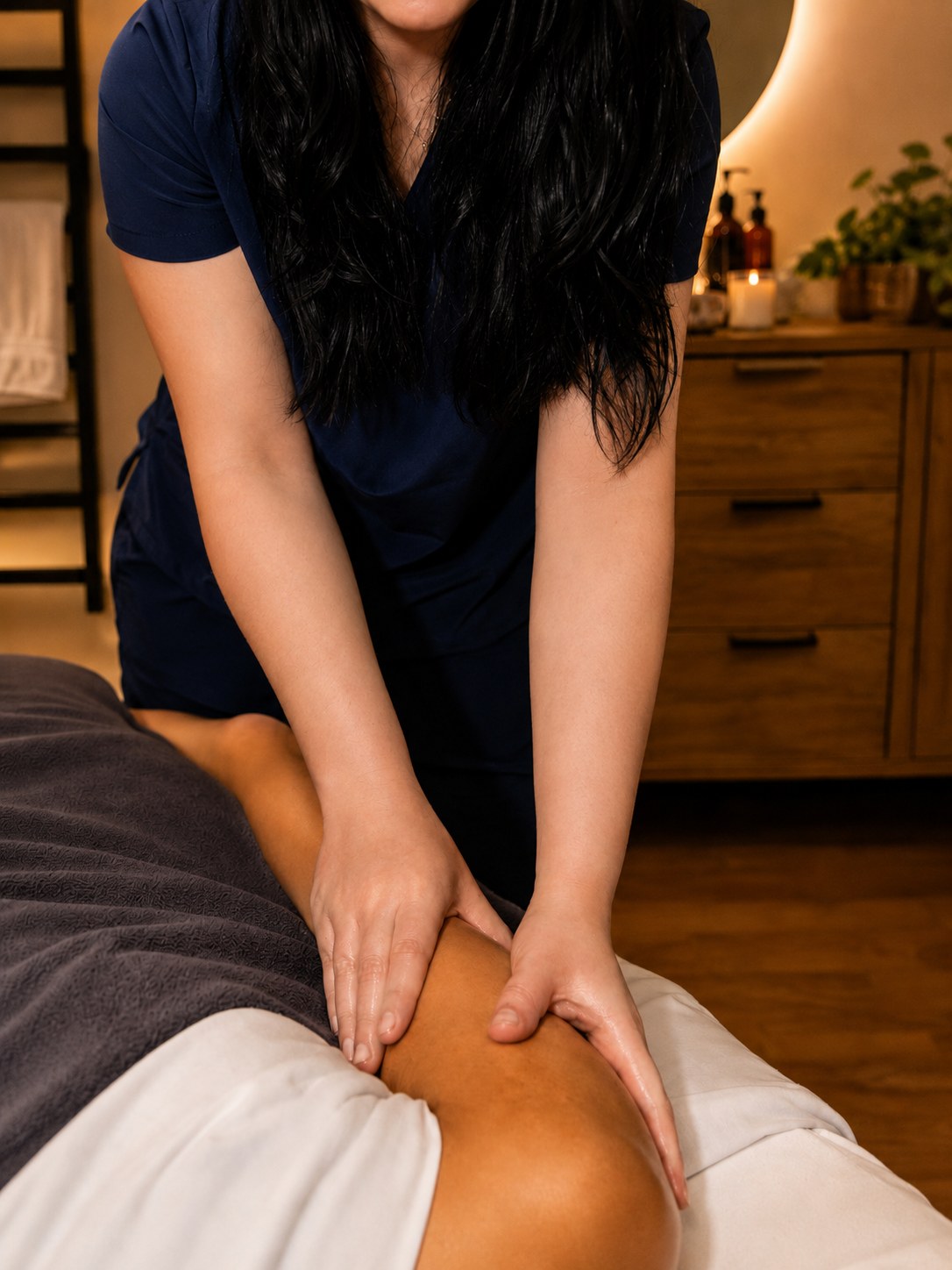
Reflexology is a bodywork tradition built on a simple, ancient premise, one your feet have been advancing for years without success: they are worth an entire session. Practiced in forms reaching back through Egyptian, Chinese, and modern Western lineages, it applies systematic thumb and finger pressure across mapped zones of the feet, ankles, and lower legs, in sequences refined over generations, while the rest of you does nothing but sink.
The maps are reflexology’s signature. The tradition charts the foot as a reflection of the whole body, with zones corresponding to its regions, and a session works those maps completely: heel to toe, inner edge to outer, with sustained pressure on points that reveal themselves as tender or congested. Whatever one makes of the maps, the practical result is a foot worked with a thoroughness no massage stopover approaches.
And feet repay thoroughness extraordinarily. Each one carries twenty-six bones, over a hundred ligaments, and thousands of nerve endings, compressed into shoes and loaded with your entire weight for decades. Deliberate, educated pressure across all of it produces an effect wildly out of proportion to the territory: clients describe whole-body unwinding, deep drowsiness, and the specific bliss of feet that feel new.
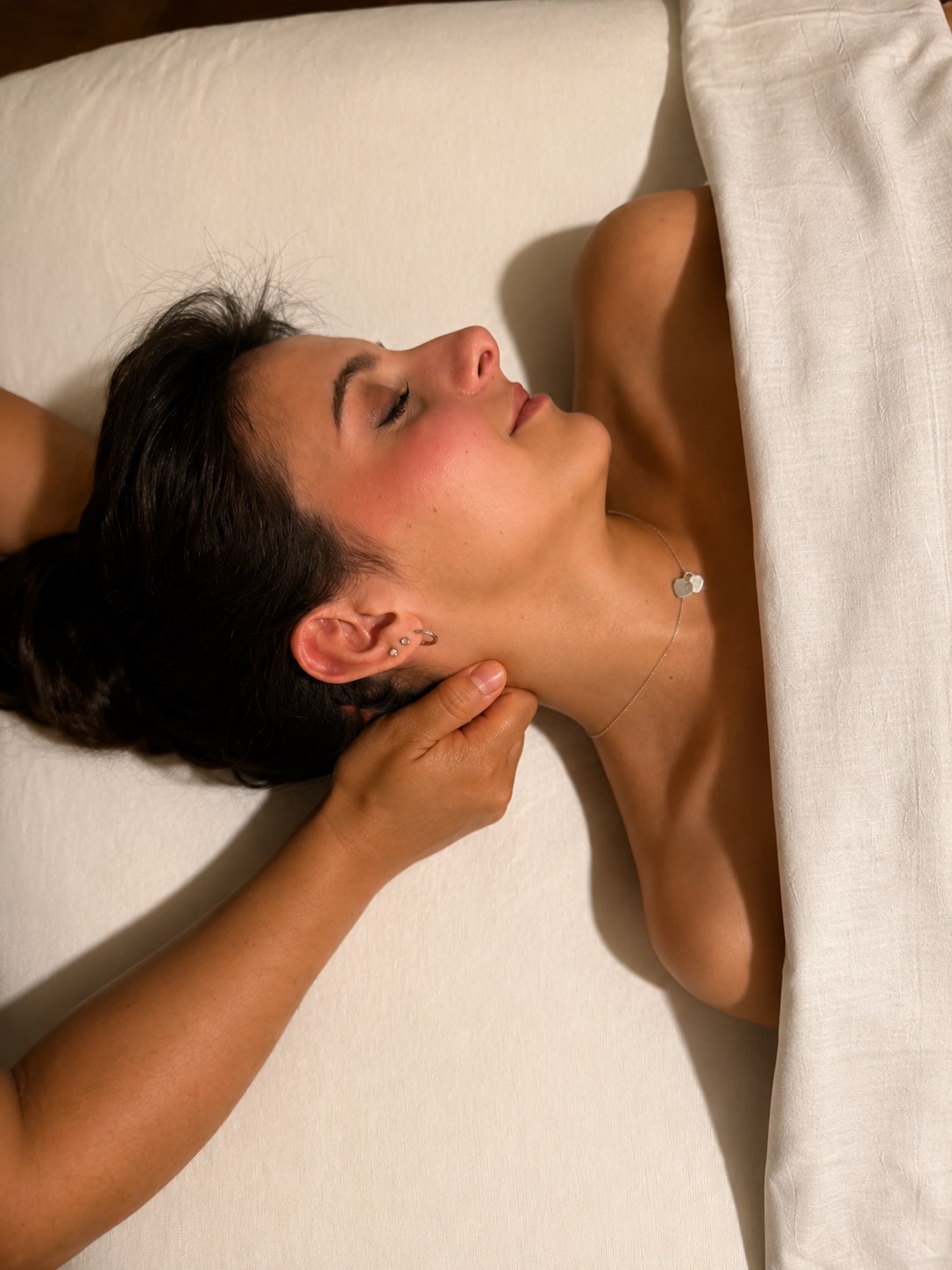
The whole-body effect deserves its own explanation, because first-timers are consistently startled by it. The feet’s nerve density means an hour of skilled pressure delivers an enormous volume of calm, orderly sensation to the nervous system, and the system responds the way it does to any sustained, safe, rhythmic input: it downshifts. Shoulders drop, breathing slows, and the busy narration of the day goes quiet, all without a hand ever traveling above the knee. Clients who cannot relax during full-body massage, who lie there supervising the process, frequently unwind completely here, precisely because the feet feel like safe, neutral territory.
There is also the plain biomechanical fact that feet in chronic low-grade tension change how everything above them behaves. Tight feet shorten strides, shift weight subtly, and keep calves and hips quietly compensating. An hour that genuinely releases them often changes how standing and walking feel for days, which regulars describe as being re-grounded, and which is the closest thing to a mechanism this therapy needs.
Tradition, honestly framed
Reflexology’s zone maps are traditional rather than clinically established, and we present them as exactly that: a rich organizing tradition that produces wonderfully thorough foot work, not a diagnostic or medical system. We make no medical claims, and a reflexologist who claims to detect or treat conditions through your feet has left honest practice behind.
What needs no tradition to explain is the effect of sustained skilled pressure on the body’s most nerve-dense, most neglected extremity: profound relaxation, measurably improved mood, and the near-universal client report of sleeping wonderfully that night. Those are the honest goods, and they are more than enough to justify the hour.
A short history worth knowing
Reflexology’s lineage is genuinely ancient. Egyptian tomb art from around 2300 BCE depicts practitioners working feet and hands; Chinese medical tradition developed foot therapy alongside acupuncture over millennia; and the modern Western form took shape in the early twentieth century, when physicians William Fitzgerald and Joe Shelby Riley mapped the body into longitudinal zones and physiotherapist Eunice Ingham refined the system into the foot charts still taught today.
Ingham’s insight, whatever one makes of the maps, was practical: the feet are the most workable, most nerve-rich, most chronically neglected surface on the body, and organizing thorough treatment around them produced results her clients returned for across decades. The tradition has been elaborated worldwide since, and the version practiced here descends from that systematic Western lineage: charted sequences, patient technique, and complete coverage as the non-negotiable standard.
We share the history because it explains the discipline’s character. This is not an improvised pampering treatment but an inherited method, refined by generations of practitioners who took feet seriously, and receiving it feels exactly like that.
Reflexology or foot massage?
A foot massage, as part of a longer session, is general soothing work: pleasant, brief, and unmapped. Reflexology is the dedicated discipline: a full session on the feet alone, following systematic sequences, working every zone including the ones a casual rub never finds, with sustained pressure on points that need longer attention.
The difference is audible in how clients describe it afterward: a foot massage feels nice; reflexology feels like your feet were taken seriously for the first time. If your feet work for a living, stand, walk, run, or carry, the dedicated hour is the one that answers them.
There is also a coverage difference that only becomes obvious in receiving it. A casual rub gravitates to the arch and heel and calls it done; the mapped sequences insist on the toe joints, the webbing, the outer edge, the top of the foot, and the often astonishingly tender territory around the ankle bones. The zones a casual rub never finds are, reliably, the ones that produce the biggest sighs.
Behind the technique
How does a session work?
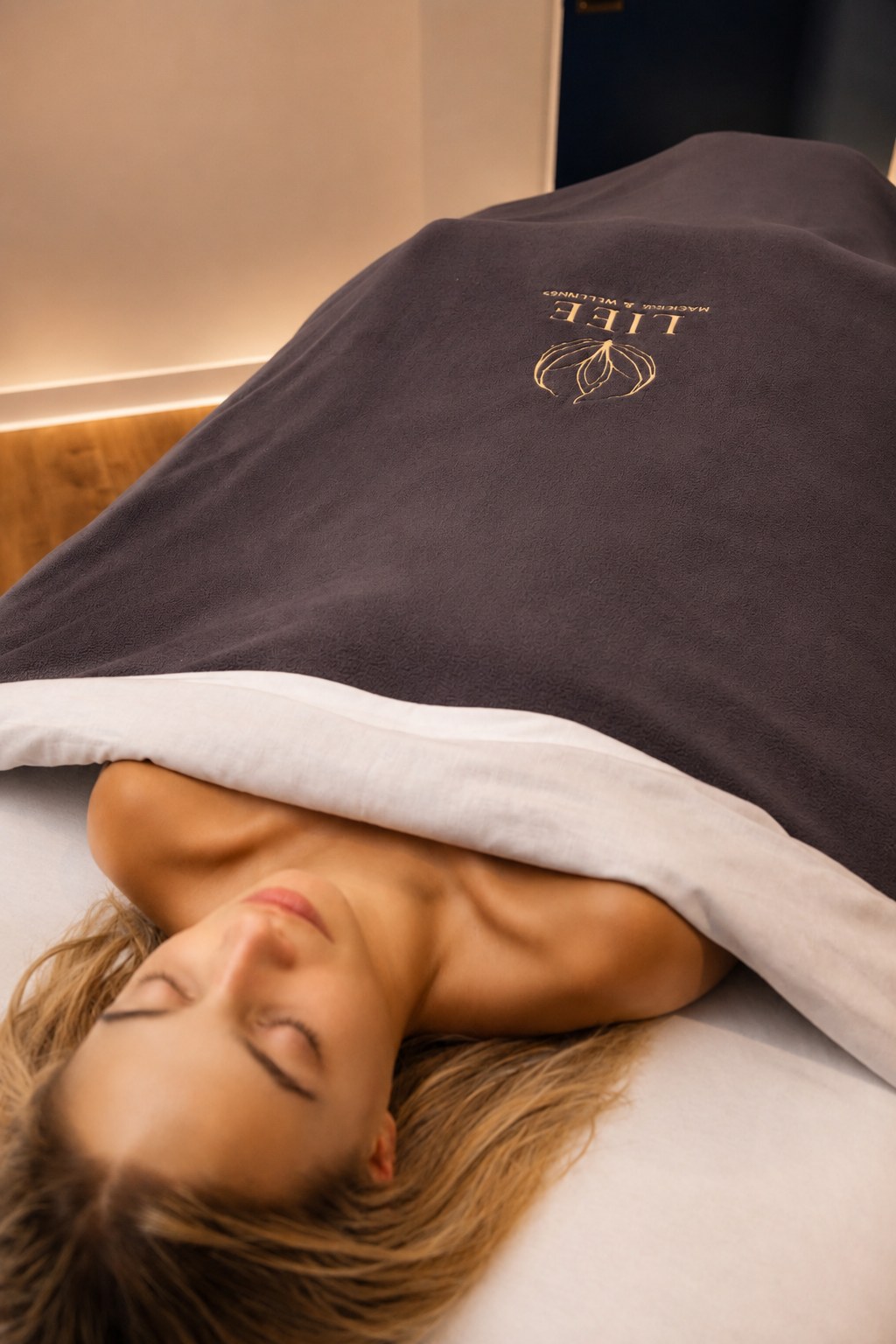
You settle comfortably on a warm table or reclined chair, fully clothed except for shoes and socks, with a blanket and bolsters arranged until lying still is effortless. The session begins with warming strokes and gentle stretches that introduce your feet to the practitioner’s hands, and this opening matters more than it looks: feet spend their lives braced inside shoes, and a few minutes of unhurried welcome is what persuades them to stop.
The mapped work follows: systematic thumb-walking across the sole, sustained pressure at points that present as tender, rotation and traction through the toes and ankle, and attention to the often-ignored top of the foot and lower leg. Tender points are worked patiently, not painfully; the sensation is a satisfying pressure that eases as the point releases.
One foot is completed before the other begins, wrapped warm while it waits, and the asymmetry of the experience is half the fun: clients report the finished foot feeling remarkably different from its untreated partner, lighter and somehow larger, a comparison that lasts exactly until the second foot catches up. It is the clearest before-and-after in bodywork, staged on your own two feet.
Both feet receive complete, unhurried attention, and the session closes with integrating strokes and, usually, a client who has to be gently informed the hour is over. Water follows, and standing up feels noticeably different: lighter, evenly grounded, and somehow recalibrated.
Sixty minutes covers both feet thoroughly; ninety allows the lower legs a full share and the pace to slow further, which devotees consider the true version.
A word on what your practitioner is doing during the long quiet stretches: thumb-walking, the technique at the heart of the discipline, is a slow, caterpillar-like progression of sustained pressure that covers every centimeter of the sole in overlapping lines. It looks meditative because it is; the practitioner is reading texture and tension as they go, spending longer where tissue is congested and noting what each foot reveals about how you stand and move. Many will share what they noticed at the end, and the accuracy of feet as a record of a person’s working life is one of this therapy’s quiet pleasures.
Warm elements often join the work: heated towels around the resting foot, warm oil or balm for the closing strokes, and occasionally warm stones along the arch. None of it is required by the tradition; all of it is welcomed by the feet.
Who books it
What clients come to us for.
Reflexology is relaxation and wellness care rather than medical treatment, and we make no medical claims. What follows are the honest, everyday reasons clients book the hour, and if yours is not listed, it almost certainly still qualifies.
- Feet that work for a living. Nurses, servers, tradespeople, and everyone who stands all day.
- Runners and walkers. The training miles, answered thoroughly.
- Whole-body stress. Clients who unwind more deeply here than in full-body massage.
- Poor sleep seasons. The post-session night is the quiet star of this therapy.
- Massage-shy bodies. Only shoes and socks come off, and the effect still reaches everywhere.
- Plain foot neglect. Decades of service, finally acknowledged.
Tell us about foot injuries, neuropathy, circulation conditions, or pregnancy at booking; sessions adapt readily, and anything medical belongs with your provider first. Recent foot fractures or open wounds need to heal before booking.
Your visit
What happens during your appointment?
Shoes off, world off. Here is the hour.
01
Settle and share
Shoes and socks off, everything else stays on. A short chat about your feet, your days, and anything worth knowing. Arrive ten minutes early.
02
Warming welcome
Gentle strokes and stretches that wake the feet up before the deeper work begins.
03
The mapped hour
Systematic pressure across every zone of both feet, patient work on tender points, and the deep drowsiness that reliably follows.
04
Ground and go
Integrating strokes, water, and a first standing moment that feels curiously recalibrated. Sleep well tonight; you likely will.
Drink water, let the evening stay soft, and notice the night’s sleep, which is this therapy’s quiet signature. Feet often feel different for days; regulars book monthly, and standing professions often settle on every two to three weeks. If you walk out and the pavement feels strangely detailed underfoot, that is normal, temporary, and generally reported with delight.
Why here
Why choose Life Massage & Wellness in Portsmouth?
Reflexology done properly is a discipline, and ours is practiced by therapists trained in the systematic tradition rather than offering an extended foot rub under a fancier name. The difference is obvious within ten minutes, and our regulars chose us on exactly that difference.
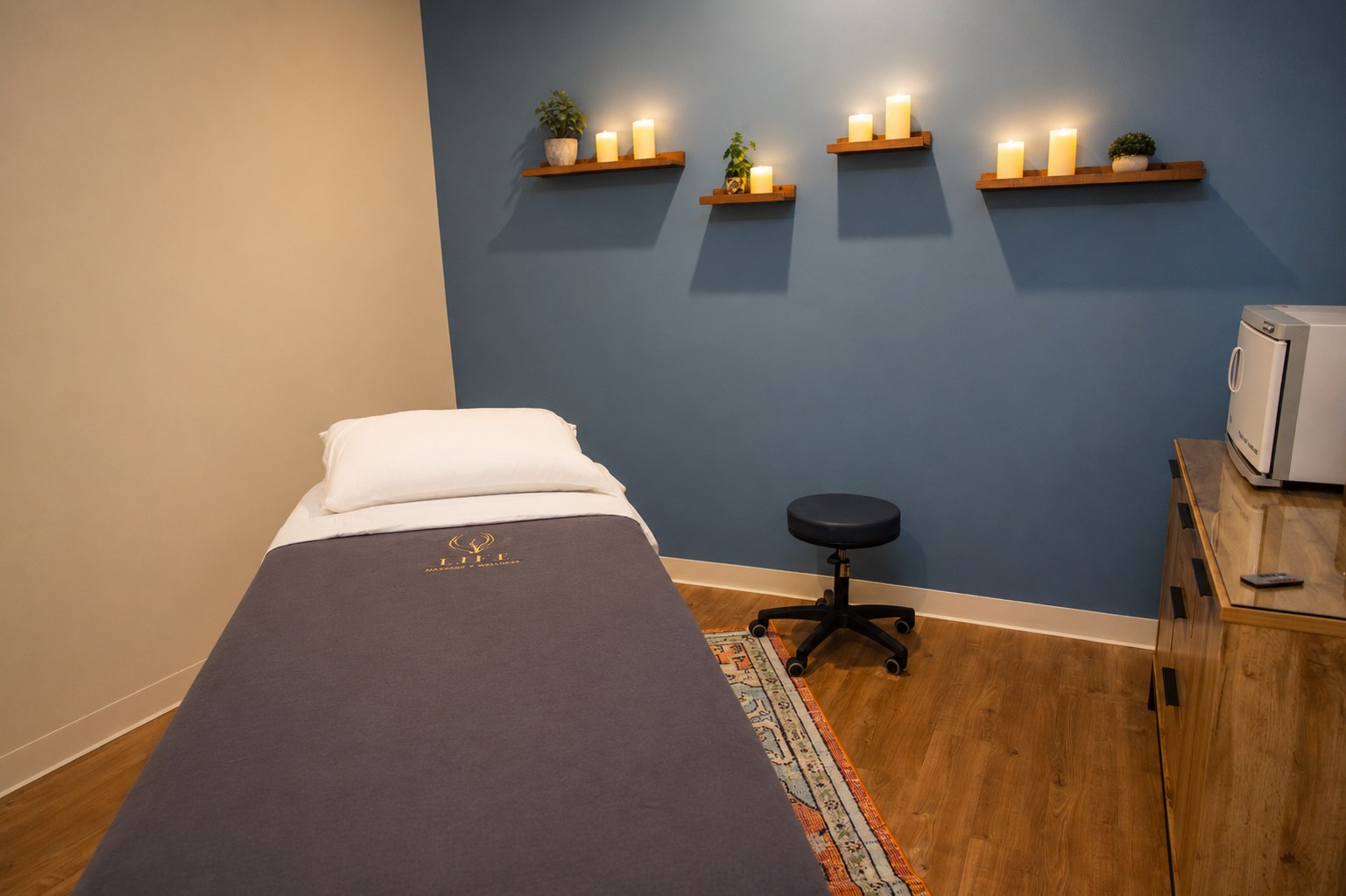
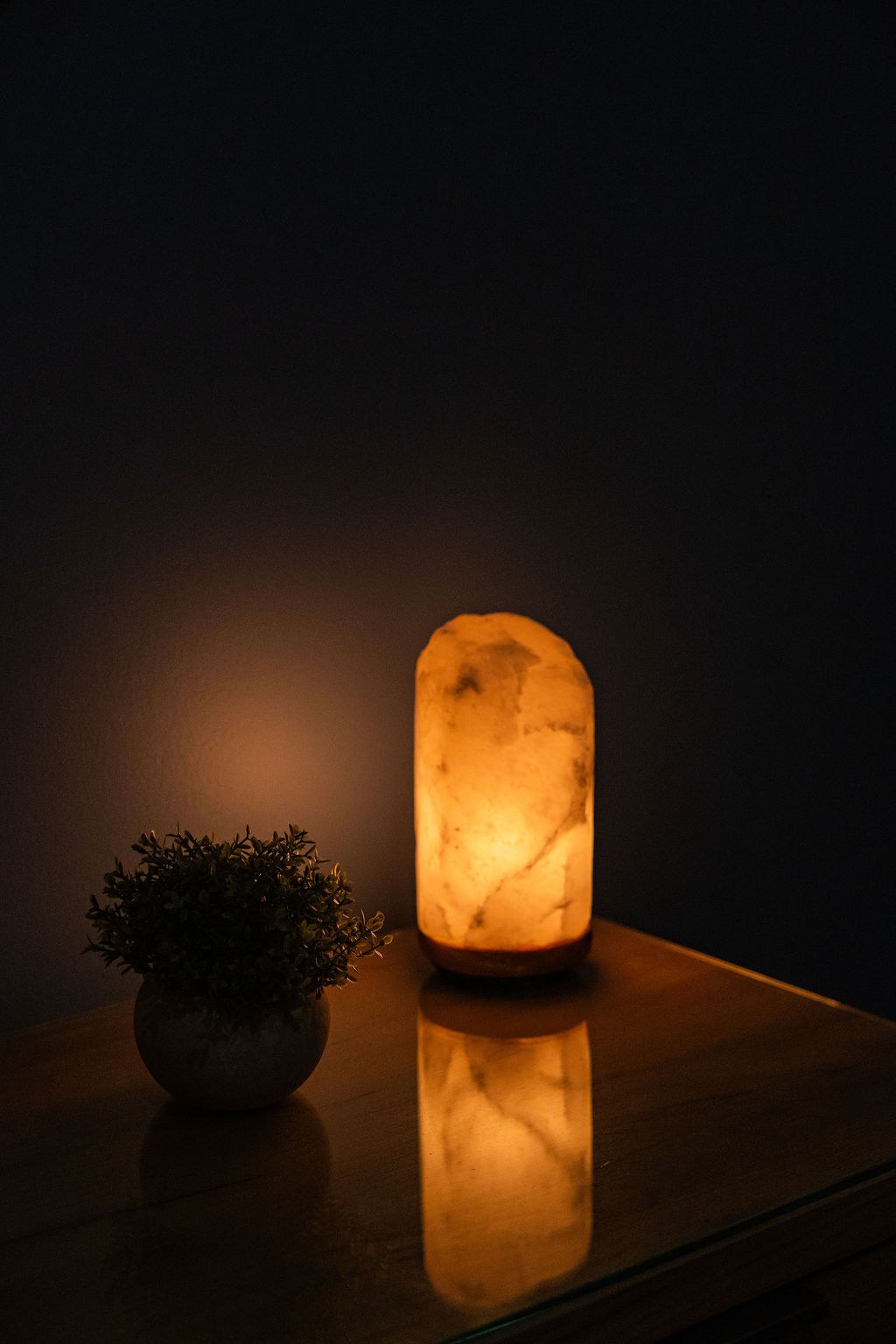
The setting does its share: private candlelit rooms, warm tables, and a studio quiet enough for the deep drowsiness this work produces, with free parking at the door of 95 Brewery Ln, Unit #17 and evening hours seven days a week, minutes from downtown Portsmouth.
Portsmouth walks, stands, and serves for a living more than most towns, and the feet of this city keep us busy: clients come from across Portsmouth and from Rye, Greenland, Newington, Dover, Newmarket, and Kittery, with healthcare and restaurant workers heavily represented and heartily welcome. More than one twelve-hour-shift nurse has a standing evening slot here, and we consider that constituency something of an endorsement.
Reflexology also pairs beautifully within our menu: before a craniosacral session for the fully unwound evening, or alternating monthly with massage, which many regulars settle into. Ask and we will build the rhythm with you.
And because feet are personal in a way shoulders are not, we will say this plainly: there is no foot our practitioners have not seen, no condition of heel or history of neglect that raises an eyebrow here. Clients delay this booking for years out of self-consciousness and universally report the worry evaporating in the first five minutes. Come as your feet are; that is what the hour is for.
Keep exploring
Pair it, gift it, or make it a habit.
Related gentle work
For feet with a schedule
Standing professions book every two to three weeks; most others settle happily at monthly. A membership covers one session each month from $105, with member rates on every additional visit and hours that roll over for up to six months, month to month with no long commitment.
For the one on their feet
The nurse, the server, the teacher, the mail carrier: someone’s feet earned this. Any amount, any service, either studio, purchased online in minutes.
Good to know
Reflexology questions, answered.
What is the difference between reflexology and a foot massage?
A foot massage is general soothing work, usually a brief stop within a longer session. Reflexology is a dedicated discipline: a full session on the feet alone, following systematic mapped sequences, with sustained pressure on points that need patient attention. Clients describe the difference simply: one feels nice, the other feels like your feet were finally taken seriously.
Does reflexology actually work?
For relaxation, unambiguously: sustained skilled pressure on the body’s most nerve-dense extremity produces deep, whole-body calm, and the sleep after sessions is near-legendary among regulars. The traditional zone maps are exactly that, tradition rather than clinical fact, and we make no medical claims. Booked for calm, restored feet, and remarkable sleep, it delivers every time.
Does reflexology hurt?
Some points present as distinctly tender, and working them produces a satisfying, pressing ache that eases as the point releases, similar to a good knot being worked in a shoulder. Nothing should make you brace; pressure adjusts on your word, and the overall arc of a session is deeply soporific rather than intense. Ticklish clients, see the next question.
What if my feet are ticklish?
The most common pre-booking worry, and the easiest solved: reflexology’s pressure is firm and sustained, which reads completely differently to the nervous system than light skittering touch. Ticklishness lives in the light range, and this work never visits it. Tell your practitioner anyway, and the first minutes will convert you as they have converted every ticklish skeptic before you.
Do I undress for reflexology?
Only shoes and socks. Everything else stays on, you rest under a blanket, and the session reaches its whole-body effect entirely through the feet, ankles, and lower legs. It is the easiest possible introduction to bodywork for anyone hesitant about undressing, and many massage regulars started exactly here.
Ready when you are
Book your reflexology session in Portsmouth.
Your feet have carried every single step of your life so far, and they have never once asked for anything. Give them the hour. Reserve online in under two minutes.