
Purposeful bodywork for people who train, compete, and refuse to sit still. Recover faster, move better, and stay ahead of the aches that sideline you.
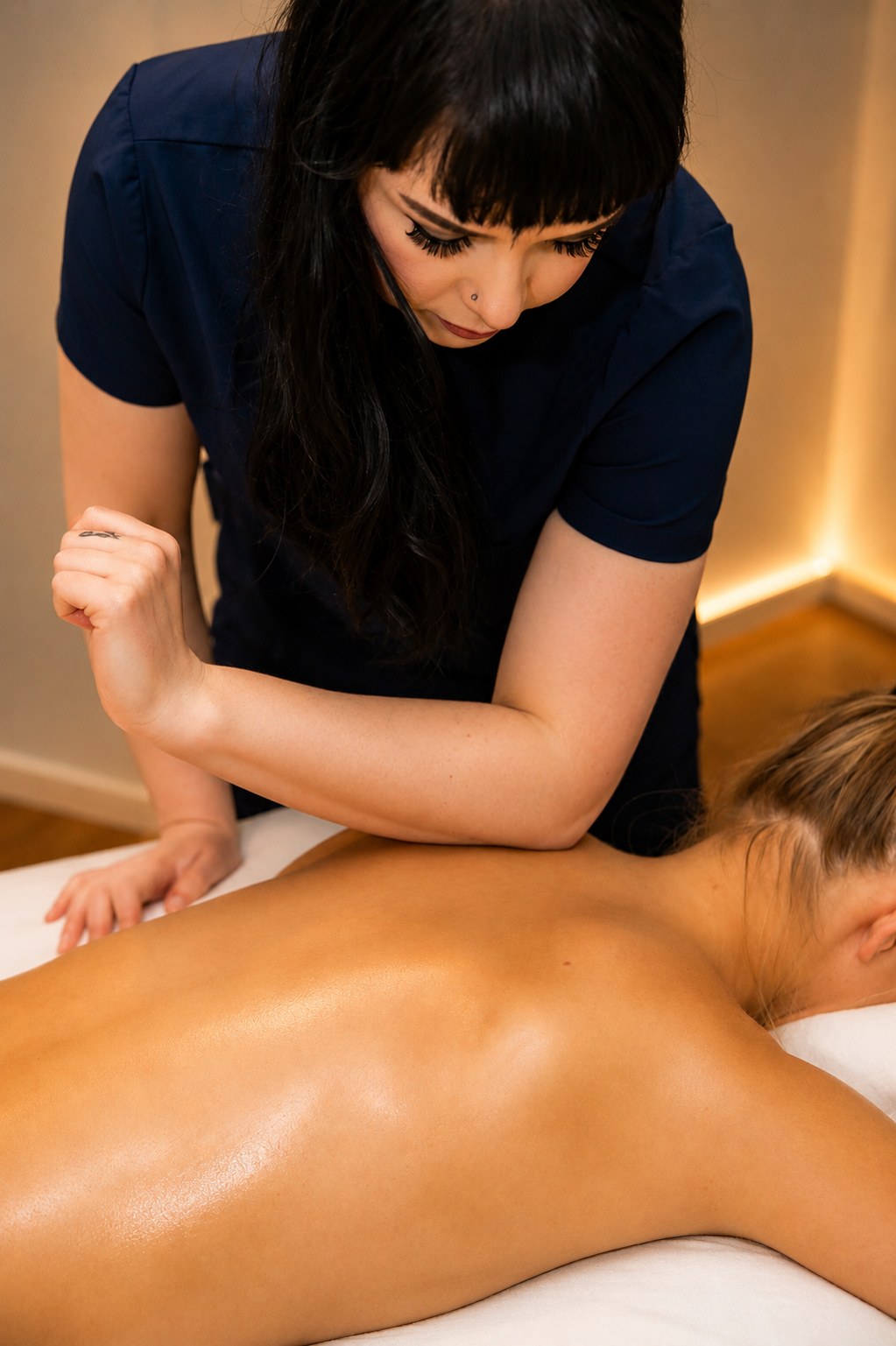
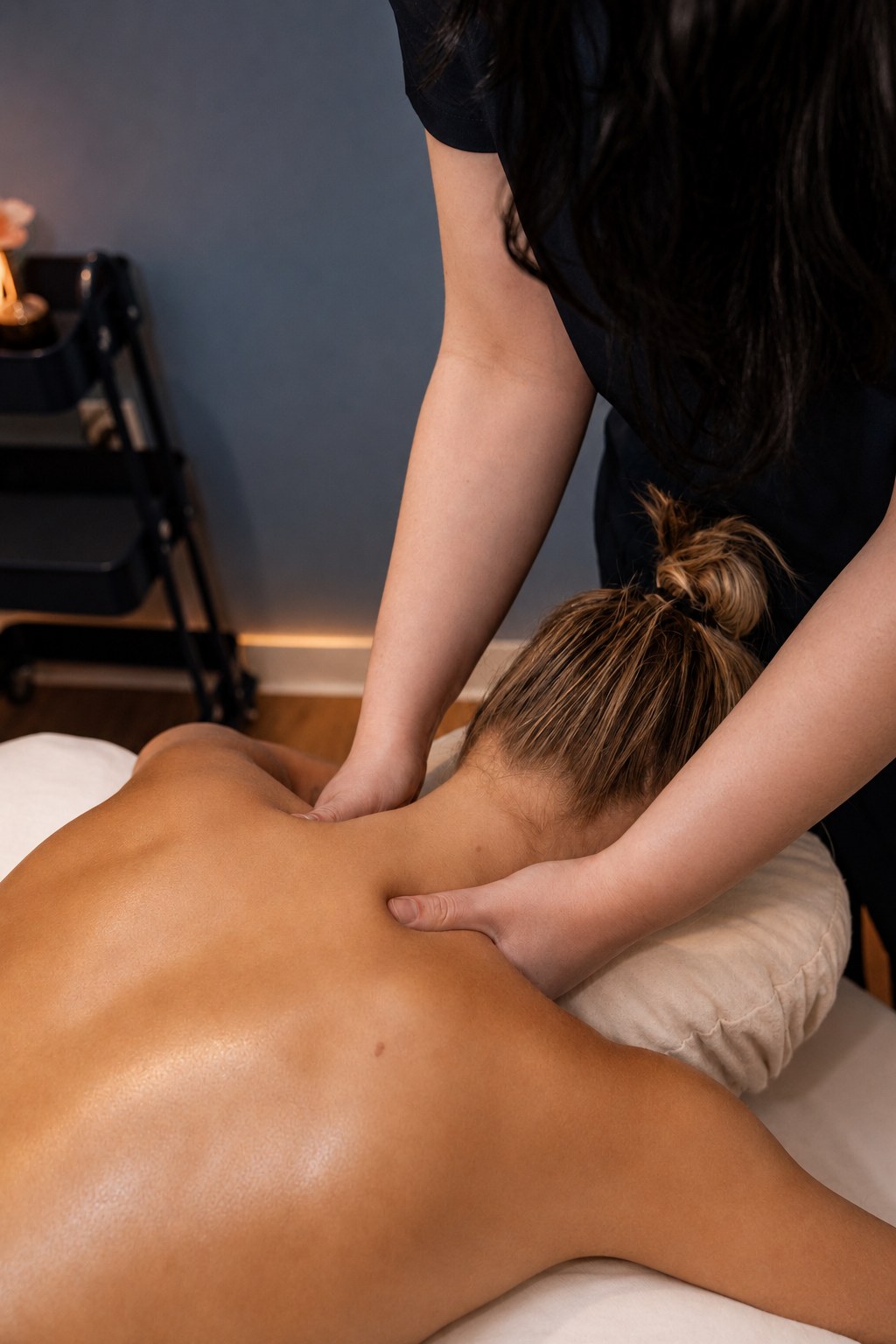
Sports massage at Life Massage and Wellness in Portsmouth, NH is bodywork with a job to do. Where a spa massage aims only to relax, a sports massage session is planned around how you train, how you move, and where your body is asking for help. Runners logging miles along the waterfront, lifters working through a strength block, golfers, paddlers, skiers, and weekend hikers all arrive with different patterns of tension, and each session is shaped to match.
Our licensed therapists combine targeted deep work, assisted stretching, and circulation-focused strokes to ease the muscle groups you rely on most. The goal is simple: help you recover faster between efforts, restore the mobility that hard training slowly steals, and catch small problems while they are still small.
You do not need a race number to benefit. If your work keeps you on your feet, your hobby keeps you on a court, or your week simply demands a lot from your body, sports massage gives that effort somewhere to land. Sessions run 60 or 90 minutes in our calm, candlelit Portsmouth studio, and every minute is tailored to your goals.
Whether you are chasing a personal best, coming back from a long layoff, or simply determined to keep doing the things you love without paying for them the next morning, this page walks you through exactly what sports massage is, how it works, and what to expect when you visit us.
Five reasons active people in Portsmouth keep sports massage on their training calendar.
Eases the heaviness and soreness that follow hard efforts.
Restore range motion in hips, shoulders, and ankles.
Finds tight, overworked tissue before it becomes a setback.
Keeps hard-working muscles supple season after season.
From flushing strokes to focused elbow work, always your call.
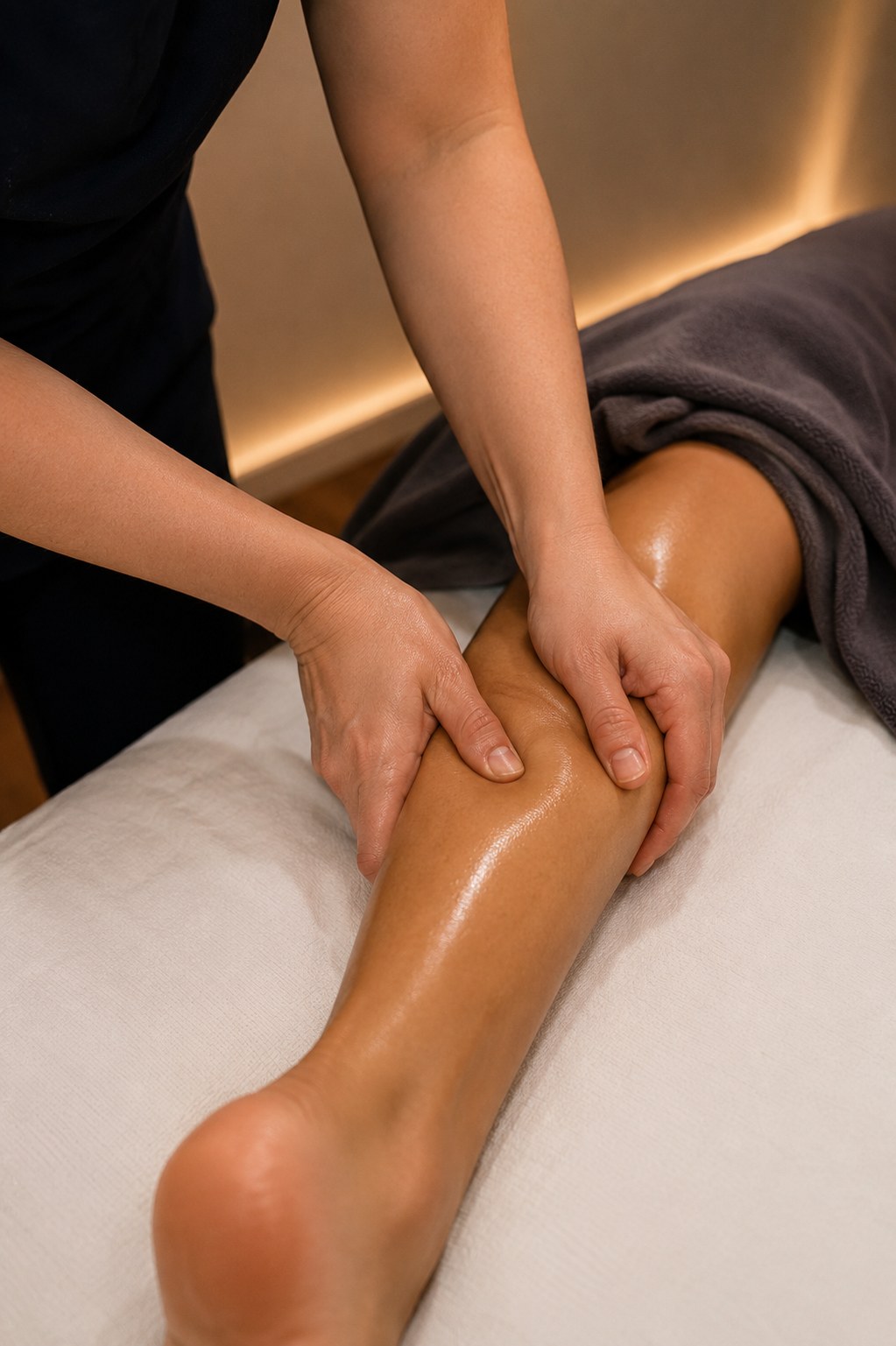
Relaxation massage, often called Swedish massage, is the gentlest and most widely loved form of bodywork. It uses long, gliding strokes, soft kneading, and light rhythmic pressure applied with warmed oil, flowing from one area of the body to the next without interruption. Where deep tissue work goes hunting for specific knots, relaxation massage treats the whole body as one connected landscape and moves across it like a slow tide.
The technique works on two levels at once. Physically, the strokes warm the muscles, encourage healthy circulation, and gently mobilize the soft tissue that stiffens with desk hours, driving, and everyday stress. Nothing is forced; tissue is coaxed, never pried. Even the fascia, the connective wrapping around every muscle, responds to this kind of unhurried touch by gradually letting go of low-grade tension it has been holding for weeks.
The second level is the one people feel most. Sustained, predictable, comfortable touch is one of the most reliable signals a human nervous system can receive that it is safe. As the session unfolds, breathing slows, thoughts stop sprinting, and the body shifts out of its alert, sympathetic state into the parasympathetic state where rest, digestion, and repair happen. This is why an hour of relaxation massage can feel like a full night of sleep, and why the calm often lasts for days afterward.
The classic vocabulary of relaxation massage is small and lovely. Effleurage is the long, gliding stroke that opens and closes every area, spreading warm oil and setting the rhythm. Petrissage is the soft kneading that gently lifts and rolls muscle, like the tissue equivalent of a deep sigh. Light friction warms specific spots that hold a little more tension, and stillness itself is used deliberately: a resting hand at the neck or shoulders at the right moment can release more than any stroke. Your therapist strings these together into one continuous, flowing sequence, usually covering the back, neck, shoulders, arms, legs, feet, and, if you like, the scalp and face.
A common misconception is that a relaxation massage is somehow a lesser massage, a nice-to-have compared with firmer styles. The truth is that gentle work reaches places pressure cannot. A clenched jaw, a tight scalp, shoulders that live somewhere near your ears: these are stress patterns, and they answer to calm more readily than to force. Skilled therapists read where your body is guarding and adjust their rhythm, their pace, and their pressure to invite it open.
Another misconception is that you need a reason to book one. You do not need pain, an injury, or a special occasion. Ongoing stress is reason enough, and so is the simple wish to feel at home in your body again. Sessions at our Portsmouth studio run 60 or 90 minutes, and many clients find the longer session is where the deepest quiet lives
A common misconception is that a relaxation massage is somehow a lesser massage, a nice-to-have compared with firmer styles. The truth is that gentle work reaches places pressure cannot. A clenched jaw, a tight scalp, shoulders that live somewhere near your ears: these are stress patterns, and they answer to calm more readily than to force. Skilled therapists read where your body is guarding and adjust their rhythm, their pace, and their pressure to invite it open.
Another misconception is that you need a reason to book one. You do not need pain, an injury, or a special occasion. Ongoing stress is reason enough, and so is the simple wish to feel at home in your body again. Sessions at our Portsmouth studio run 60 or 90 minutes, and many clients find the longer session is where the deepest quiet lives
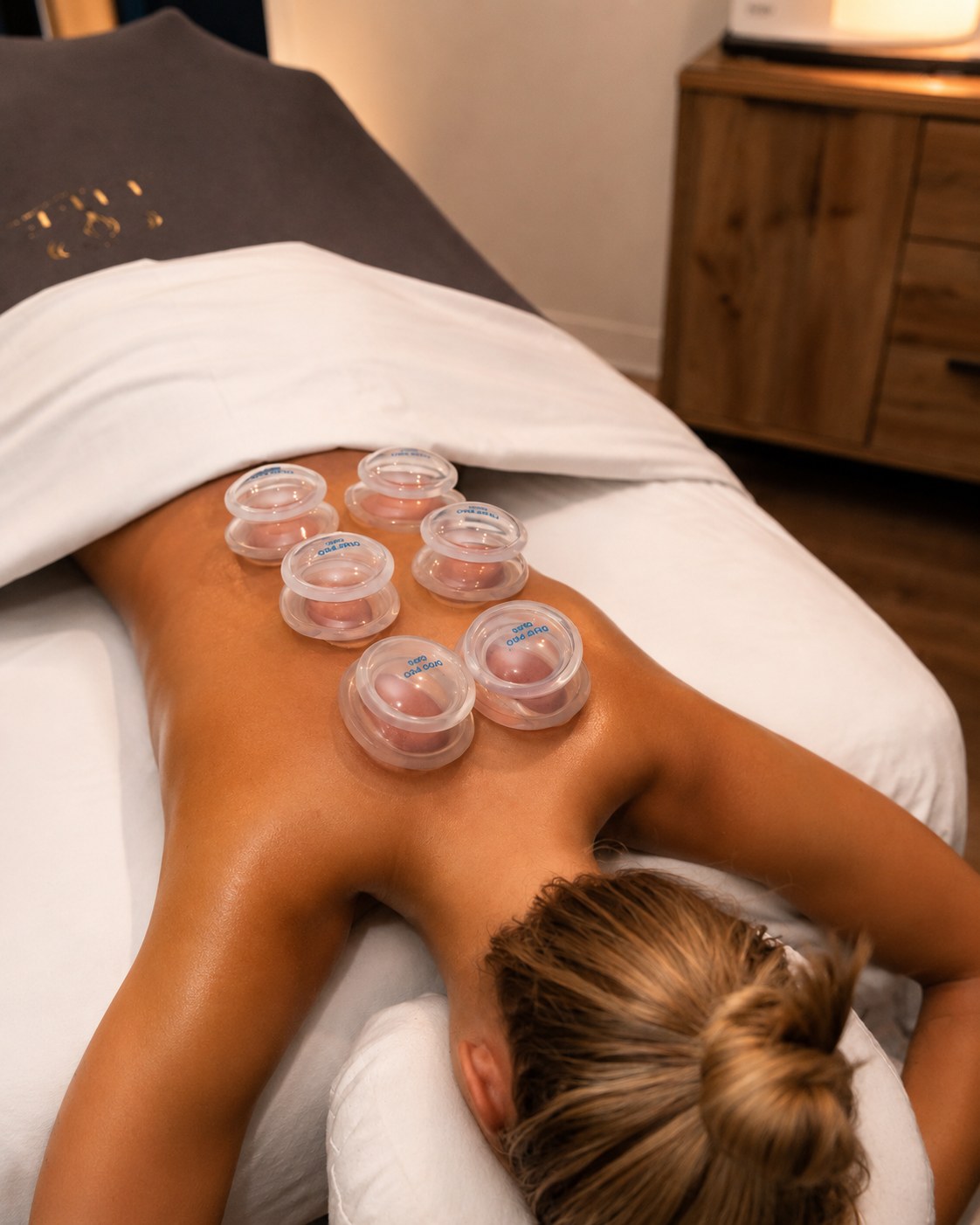
Your session begins with a brief conversation. Your therapist asks how you are feeling, where you hold your stress, and whether there are areas you would like extra attention or areas you would rather skip. There is no exam and no agenda; the assessment here is simply learning what calm means for you today. First timers are especially welcome, and your therapist will happily explain anything before it happens.
On the table, the work follows your body’s response. Strokes begin light and grow slightly deeper as muscles warm and accept the touch. Your therapist watches your breathing and how your tissue softens, checking in quietly early in the session and then letting silence do its work. You are welcome to drift, doze, or say anything at any time; many clients are asleep within fifteen minutes, and that is considered a success.
Small details do quiet work throughout: the table is warmed before you arrive, the oil is warmed before it touches your skin, and the pace of every stroke stays unhurried from the first minute to the last. Consistency is the technique; your nervous system relaxes because nothing about the hour ever startles it.
The sequence itself is built to carry you downward. Sessions usually open at the back and shoulders, where most people hold the day, then move outward to the arms, legs, and feet before finishing at the neck and scalp. That order is deliberate: by the time the lightest, most soothing work arrives, your body has already decided it is safe to let go. Many clients tell us the last ten minutes are the part they remember most, and the part they book the next appointment for.
Afterward, you will be given water and a few easy suggestions: move slowly, keep the evening light, and let the calm carry as far into your week as it will go. There is no soreness to manage after a relaxation massage, only the pleasant heaviness of a body that has finally put its load down.
Sports massage is not a medical treatment, and we never promise cures. It is, however, a service many clients seek out for the everyday consequences of an active life. If you recognize yourself in the list below, a session is a sensible first step, and your therapist will tell you honestly if what you describe belongs with a physical therapist or physician instead
Sports massage is not a medical treatment, and we never promise cures. It is, however, a service many clients seek out for the everyday consequences of an active life. If you recognize yourself in the list below, a session is a sensible first step, and your therapist will tell you honestly if what you describe belongs with a physical therapist or physician instead
If it is your first professional massage, here is the full picture. No surprises, no awkward moments, nothing to get right.
This 1.5-hour experience is designed to give your skin and energy a quick boost. It includes an express cleansing facial, coconut sugar body scrub, back and neck massage, and scalp massage. You will leave with refreshed skin, a clearer mind, and an all-over glow.
This 1.5-hour experience is designed to give your skin and energy a quick boost. It includes an express cleansing facial, coconut sugar body scrub, back and neck massage, and scalp massage. You will leave with refreshed skin, a clearer mind, and an all-over glow.
This 1.5-hour experience is designed to give your skin and energy a quick boost. It includes an express cleansing facial, coconut sugar body scrub, back and neck massage, and scalp massage. You will leave with refreshed skin, a clearer mind, and an all-over glow.
This 1.5-hour experience is designed to give your skin and energy a quick boost. It includes an express cleansing facial, coconut sugar body scrub, back and neck massage, and scalp massage. You will leave with refreshed skin, a clearer mind, and an all-over glow.
Wondering what to wear? Anything comfortable. Our oils are made not to stain, but favorites are best left at home. If you tend to run cold, tell us and we will warm the table before you arrive. Planning your day, most clients find the sweet spot is booking late afternoon or early evening, leaving the rest of the night unplanned so the calm has somewhere to go. And if you are booking for a special occasion, ask about our couples room; unwinding is even better with company.
No mystery, no awkwardness. Here is the whole arc of a sports massage visit at our Portsmouth studio, from the front door to the drive home.
A membership includes one massage each month from $105, with member rates on every extra session, hours that roll over for six months, and no long-term commitment. For anyone training year-round, it is the easiest way to make recovery routine and save on every visit.
Know someone chasing a marathon PR or nursing a stubborn shoulder? A gift card covers any service at either studio, in any amount, and takes two minutes to send online.
It depends on your training load. Many active clients settle into a rhythm of every three to four weeks for maintenance, moving to every one to two weeks during heavy training blocks or race season. If you are new, start with a single session, see how your body responds over the following week, and let your therapist help you find the cadence that keeps you feeling consistently good.
After deeper work, some people feel a mild, workout-like soreness for a day or two; lighter recovery-focused sessions usually leave you feeling loose right away. Drinking water, moving gently, and warmth all help. If you ever feel more than mild soreness, tell your therapist at your next visit so the pressure can be tuned; the right depth for you is exactly what we want to find.
It depends on your training load. Many active clients settle into a rhythm of every three to four weeks for maintenance, moving to every one to two weeks during heavy training blocks or race season. If you are new, start with a single session, see how your body responds over the following week, and let your therapist help you find the cadence that keeps you feeling consistently good.
After deeper work, some people feel a mild, workout-like soreness for a day or two; lighter recovery-focused sessions usually leave you feeling loose right away. Drinking water, moving gently, and warmth all help. If you ever feel more than mild soreness, tell your therapist at your next visit so the pressure can be tuned; the right depth for you is exactly what we want to find.
Your training does the breaking down. Let us handle some of the building back up.
Therapeutic massage and specialty wellness in Portsmouth, NH and Amesbury, MA.
Portsmouth: 603 373 8780
Amesbury: 978 792 5201
Sunday 8:00 am – 5:00 pm
Monday – Thursday 8:00 am – 7:00 pm
Friday 8:00 am – 6:00 pm
Saturday 8:00 am – 5:00 pm
Sunday Closed
Monday – Thursday 9:00 am – 8:00 pm
Friday 9:00 am – 6:00 pm
Saturday 9:00 am – 5:00 pm
Sunday 8:00 am – 5:00 pm
Monday – Thursday 8:00 am – 7:00 pm
Friday 8:00 am – 6:00 pm
Saturday 8:00 am – 5:00 pm
Sunday Closed
Monday – Thursday 9:00 am – 8:00 pm
Friday 9:00 am – 6:00 pm
Saturday 9:00 am – 5:00 pm