
Precise, clinically informed bodywork for pain that keeps coming back. We find the source of the tension rather than chasing the ache, so relief has a reason to last.
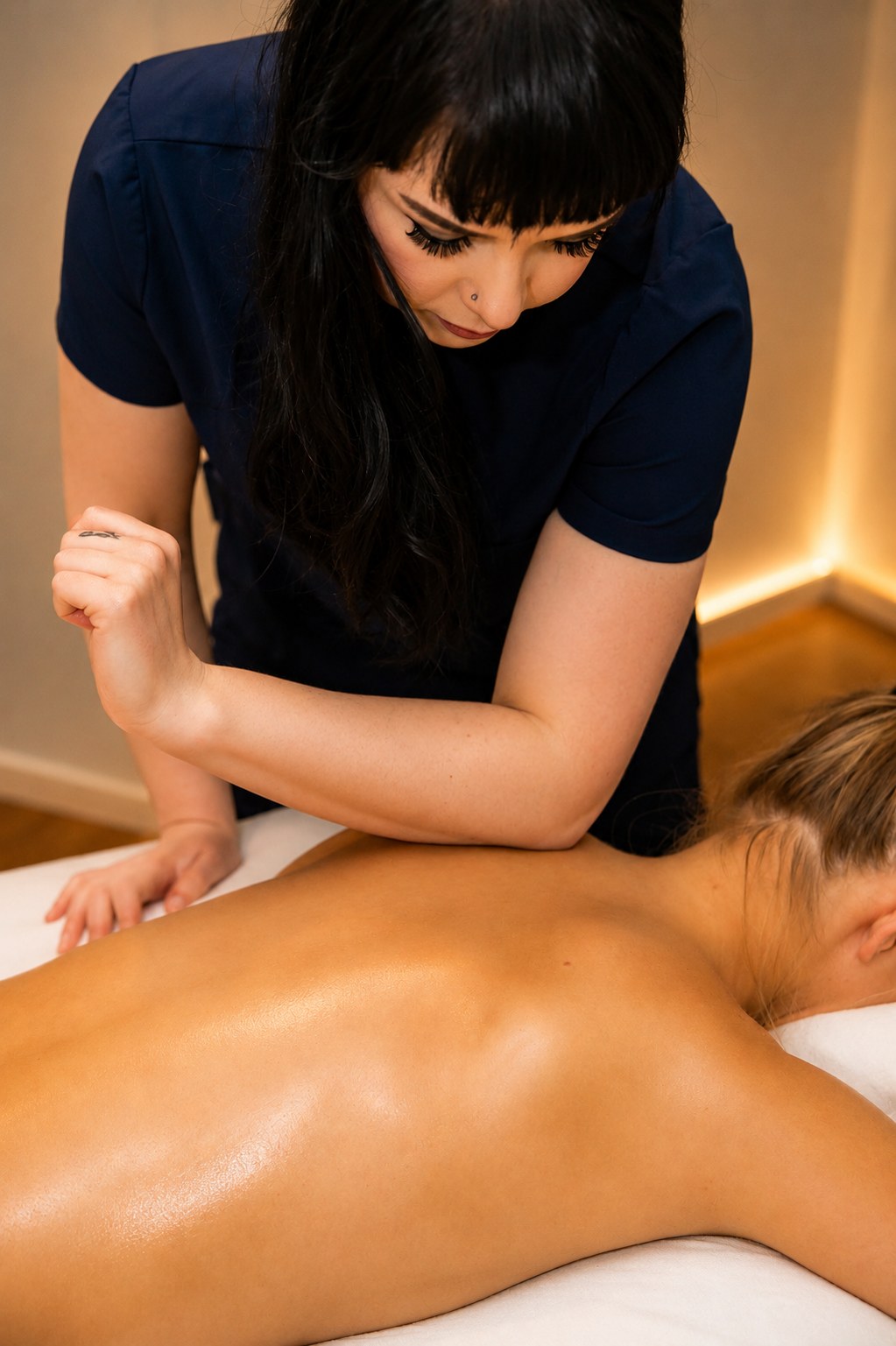
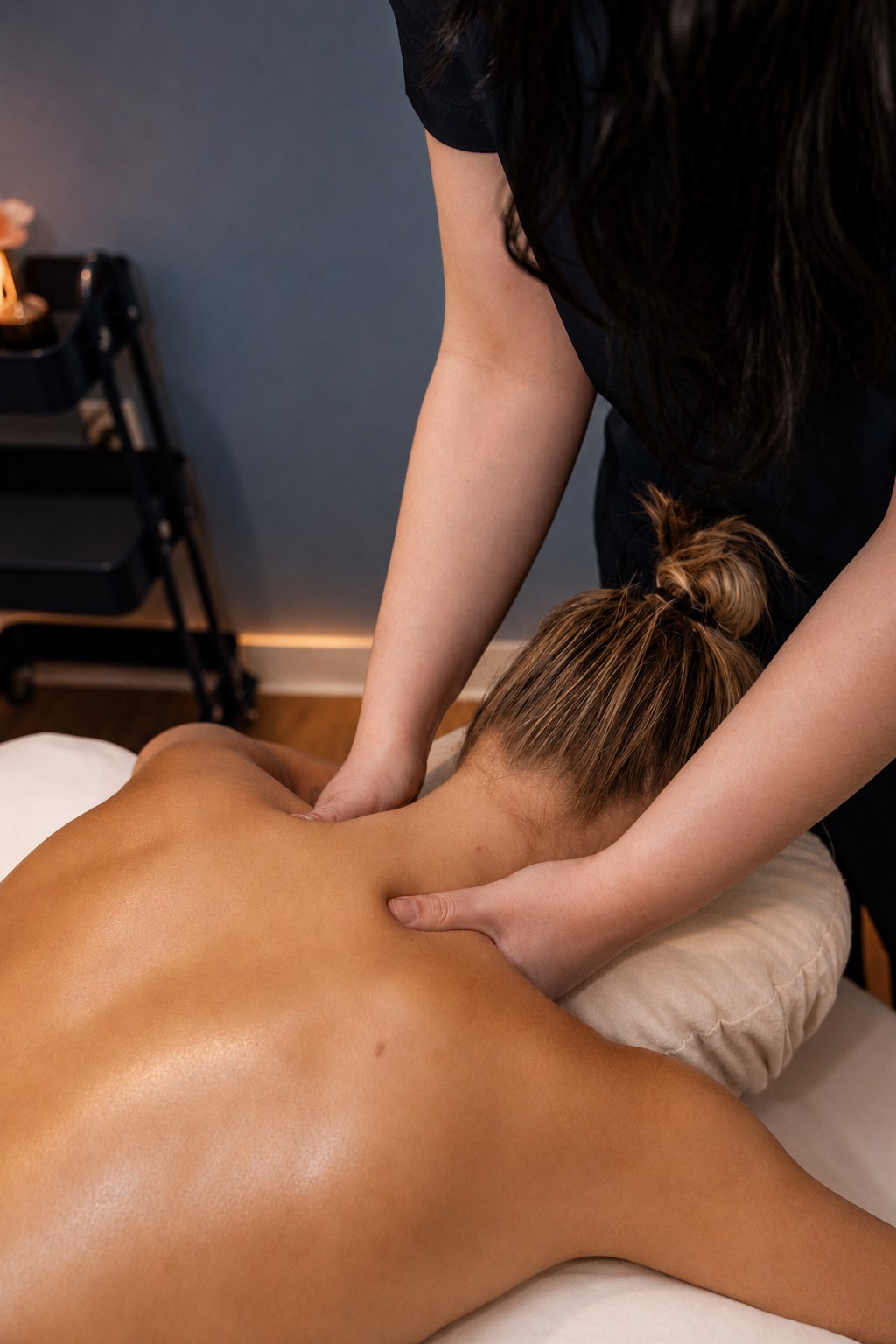
Neuromuscular massage at Life Massage and Wellness in Portsmouth, NH is for people whose pain has become a pattern. The shoulder that tightens every Tuesday. The low back that flares after the same hour of driving. The headache that starts at the base of the skull and has been arriving for years. Ordinary massage feels wonderful on these, and then the ache returns by the weekend, because the spot that hurts is rarely the spot that started it.
Neuromuscular therapy works differently. It is a systematic approach that maps the relationship between nerves, muscles, and the trigger points that refer pain to other parts of the body. Your therapist assesses posture and movement, locates the specific bands of tissue holding the pattern in place, and applies sustained, precisely aimed pressure until those points release. Then the muscle is retrained to hold its new, easier length.
This is focused, purposeful work rather than a full-body glide, and clients often describe it as the first massage that actually changed something. It suits desk workers with chronic neck tension, tradespeople whose bodies repeat one motion all day, drivers, nurses, hairstylists, and anyone who has stopped expecting their pain to go anywhere.
Sessions run 60 or 90 minutes at our Portsmouth studio, and every one begins by finding out what your body is actually doing before a single technique is chosen.
Five reasons people in Portsmouth book neuromuscular massage when other approaches have not held.
Maps referred pain back to the trigger point creating it.
Sustained pressure that releases what stretching cannot reach.
Range of motion returns as guarded muscle stands down.
Retraining the pattern, not just quieting the symptom.
-Depth is calibrated to your tissue, never imposed on it.
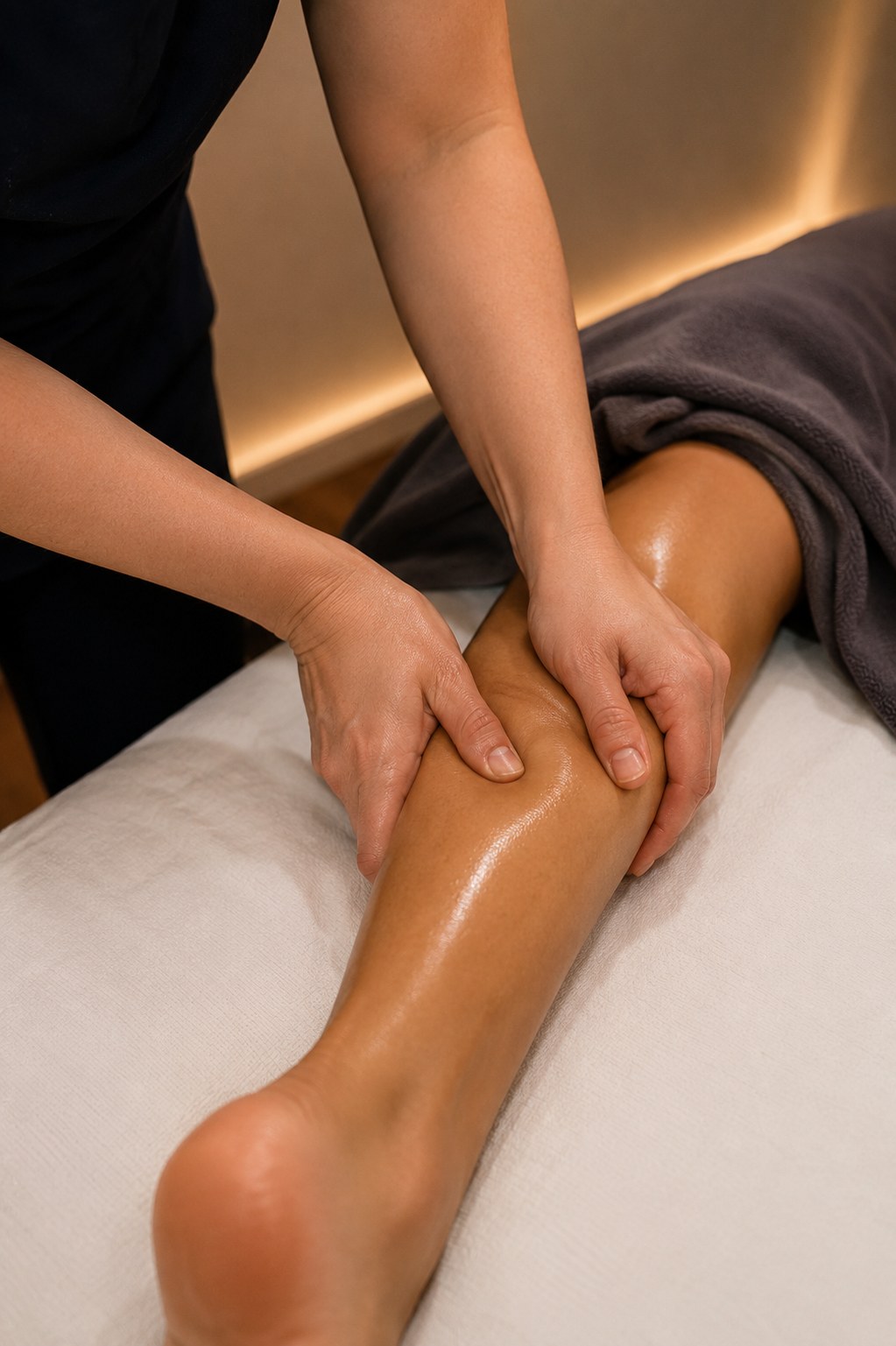
Neuromuscular massage, sometimes called neuromuscular therapy or NMT, is a specialized form of manual therapy built on a simple observation: muscles and nerves are one system, and pain is frequently a communication problem between them. When a muscle is overloaded, held in a shortened position, or starved of good circulation, it can develop hyperirritable spots within its fibers. These trigger points do two things. They hurt locally, and they refer pain elsewhere along predictable maps that have been documented for decades.
That referral is why neuromuscular work can feel almost uncanny the first time. A therapist presses a point in your upper trapezius and the ache appears behind your eye. Pressure into the gluteal muscles reproduces the sensation running down the back of your thigh. Nothing mystical is happening; you are simply feeling a well-mapped nerve relationship, and identifying it is what allows the right muscle to be treated instead of the loudest one.
The technique itself is deliberate and unhurried. Once a point is located, your therapist applies steady, sustained pressure and holds it while the tissue changes underneath. Blood flow increases, the local chemistry shifts, and the nervous system gradually withdraws its alarm. What was a hard, tender knot softens over the course of thirty to ninety seconds. The therapist then lengthens the muscle gently so it learns the new position rather than snapping back to the old one.
Crucially, none of this is guesswork. A trigger point in a given muscle refers pain to roughly the same region in almost everyone, which means an experienced therapist can often work backward from where you hurt to a short list of muscles worth investigating. Your description of your symptom is genuinely diagnostic information, which is why the conversation at the start of a session is not small talk.
Classical neuromuscular therapy considers several contributing factors, and a good session touches on all of them. Ischemia, meaning restricted blood flow, is what makes tissue tender before any knot is even palpable. Trigger points create the referral patterns described above. Nerve compression and entrapment can occur where tight muscle or dense fascia presses against a nerve. Postural distortion, the slow drift of the body away from balance, keeps loading the same structures. Biomechanical dysfunction, meaning the way you actually move, writes that loading into your daily life. Nutritional and stress factors influence how readily tissue recovers.
That framework is why your therapist asks about your work, your sleep, your commute, and your hobbies before touching anything. A person whose shoulder pain comes from twelve hours of laptop posture needs different work than someone whose identical symptom comes from an old ankle injury changing how they stand. Same complaint, different origin, different session.
A word on misconceptions. Neuromuscular massage is not simply a harder deep tissue massage. Depth matters, but precision matters more, and a well-aimed moderate pressure held on the right point outperforms heavy pressure applied broadly. It should also not be an ordeal. The sensation of a trigger point releasing is often described as a satisfying hurt-so-good ache that fades as the point lets go. Pain sharp enough to make you brace is counterproductive, and we adjust immediately.
Every session opens with assessment. Your therapist talks through your history and symptoms, then looks at how you stand, how your shoulders sit, and how your body moves through a few simple ranges. This is where the pattern usually reveals itself, often somewhere well away from the place that hurts.
On the table, the work alternates between locating and releasing. Your therapist palpates along the muscle until a point reproduces your familiar symptom, then holds steady pressure while asking you to rate it. A useful scale is one to ten, and the target is around a seven: strong enough to be working, never so much that you hold your breath. As the point softens, the number drops on its own, which is exactly the signal we want.
That drop is the moment worth waiting for, and it is why neuromuscular sessions cover less ground than a full-body massage. Rather than treating everything lightly, your therapist spends real time on the handful of structures actually driving your symptom. Some clients are surprised that half an hour goes to one shoulder. That concentration is the point, and it is usually what makes the difference between temporary relief and a pattern that finally changes.
The last piece is what happens after the pressure lifts. A released muscle needs to be taught its new length or it will quietly return to the old one within days. Your therapist finishes each area with gentle lengthening and, before you leave, gives you two or three simple positions to repeat at home. They take about four minutes a day, and clients who do them consistently need us less often, which is exactly the outcome we are aiming for.
Neuromuscular massage is not a medical treatment and we make no medical claims. It is, however, a service many clients seek out when discomfort has settled into a recurring pattern.
Precise work should not feel intimidating. Here is exactly how a neuromuscular session unfolds at our Portsmouth studio.
We talk through where it hurts, when it started, and what makes it better or worse, then take a quick look at your posture and movement. Arriving ten minutes early keeps this unhurried.
You undress to your comfort level and rest under a sheet on a warm table. Only the area being worked is uncovered at any time, and our oils are water soluble and made not to stain.
Sixty or ninety minutes of focused work, moving between assessment and treatment. Your therapist will ask you to rate pressure as points are held, and will adjust the moment you say so.
Expect a day or two of mild, workout-like soreness in the treated areas. Water, warmth, gentle movement, and the two or three positions we show you will carry the results forward.
Many patterns ease meaningfully within two or three sessions spaced a week or two apart, then hold with occasional maintenance. Your therapist will be straight with you about what to expect rather than selling you a package. If your symptom is not responding the way it should after a few visits, we would rather tell you plainly and suggest another avenue than keep booking you.

Our studio at 95 Brewery Ln, Unit #17 is minutes from downtown Portsmouth with free parking right at the door, which matters when you are arriving with a body that already hurts. We are open seven days a week with evening hours, so appointments fit around work rather than competing with it.
Portsmouth keeps people at desks, behind wheels, on their feet in kitchens and shops, and out on the water and the trails on weekends. Those are exactly the loading patterns neuromuscular therapy is built for, and our therapists see them every day. Several bring particular strength in detailed, assessment-led work, and they are genuinely interested in the puzzle your body presents.
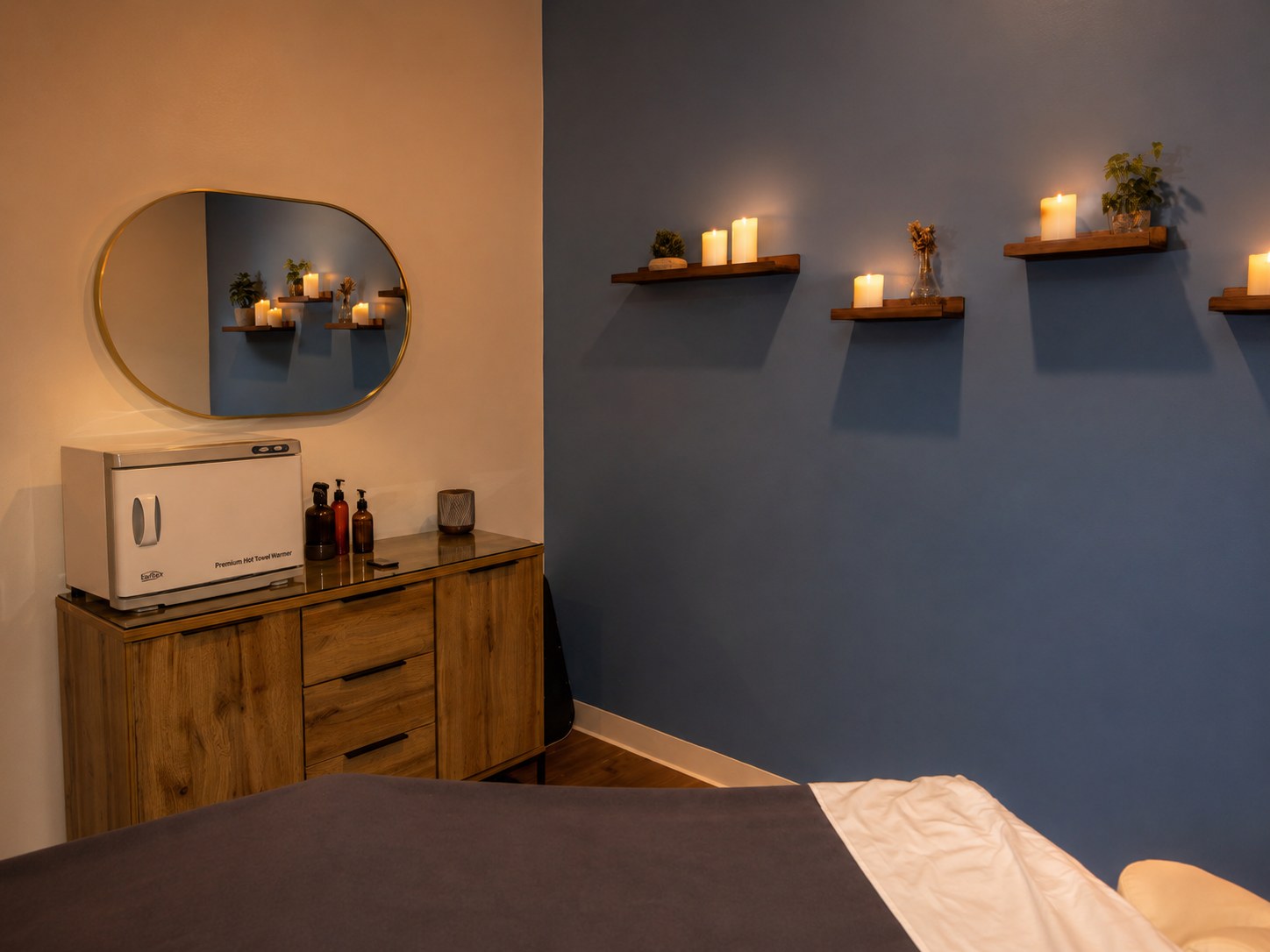
What sets the experience apart is that this precision happens in a warm room rather than a clinical one. Candlelight, warm tables, unhurried appointments, and a therapist who explains what they are finding as they go. Clinical thinking, human delivery. Clients come to us from across Portsmouth and from Rye, Greenland, Newington, Dover, Newmarket, and Kittery, many after trying everything else.
Recurring pain responds to consistency more than intensity. A membership includes one massage each month from $105, member rates on every additional session, and hours that roll over for six months, all month to month with no long commitment.
Know someone who has been quietly living with the same ache for years? A gift card covers any service at either studio, in any amount, and takes two minutes online.
Still have a question? We’re happy to talk it through before you book.
There is a distinct sensation when a trigger point is engaged, and most clients describe it as a strong but satisfying ache rather than pain. We use a simple one to ten scale and aim for about a seven, where the work is clearly happening but you are still breathing easily. Anything that makes you brace or hold your breath is counterproductive, so tell your therapist and the pressure changes immediately.
Mild soreness in the treated areas for a day or two is common and normal, similar to how you feel after a good workout. Drinking water, keeping warm, and moving gently all help it pass faster. If soreness feels sharper than that, mention it at your next visit so the pressure can be recalibrated; finding the right depth for your body is part of the work.
Bring us the ache you have stopped expecting to fix. Reserve online in minutes, or call and we will help you decide if this is the right work for you.
Therapeutic massage and specialty wellness in Portsmouth, NH and Amesbury, MA.
Portsmouth: 603 373 8780
Amesbury: 978 792 5201
Sunday 8:00 am – 5:00 pm
Monday – Thursday 8:00 am – 7:00 pm
Friday 8:00 am – 6:00 pm
Saturday 8:00 am – 5:00 pm
Sunday Closed
Monday – Thursday 9:00 am – 8:00 pm
Friday 9:00 am – 6:00 pm
Saturday 9:00 am – 5:00 pm
Sunday 8:00 am – 5:00 pm
Monday – Thursday 8:00 am – 7:00 pm
Friday 8:00 am – 6:00 pm
Saturday 8:00 am – 5:00 pm
Sunday Closed
Monday – Thursday 9:00 am – 8:00 pm
Friday 9:00 am – 6:00 pm
Saturday 9:00 am – 5:00 pm