
Purposeful bodywork for people who train, compete, and refuse to sit still. Recover faster, move better, and stay ahead of the aches that sideline you.
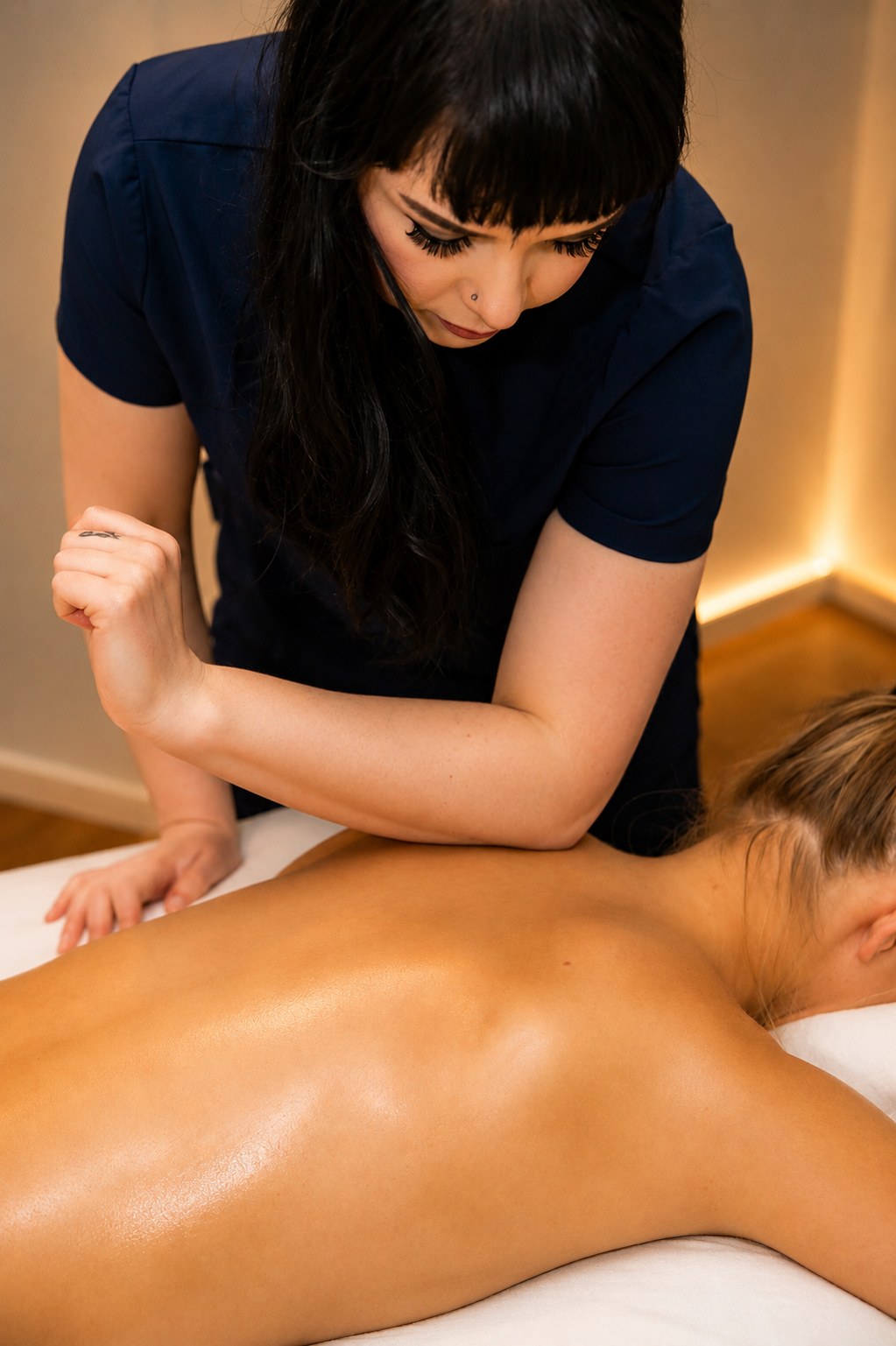
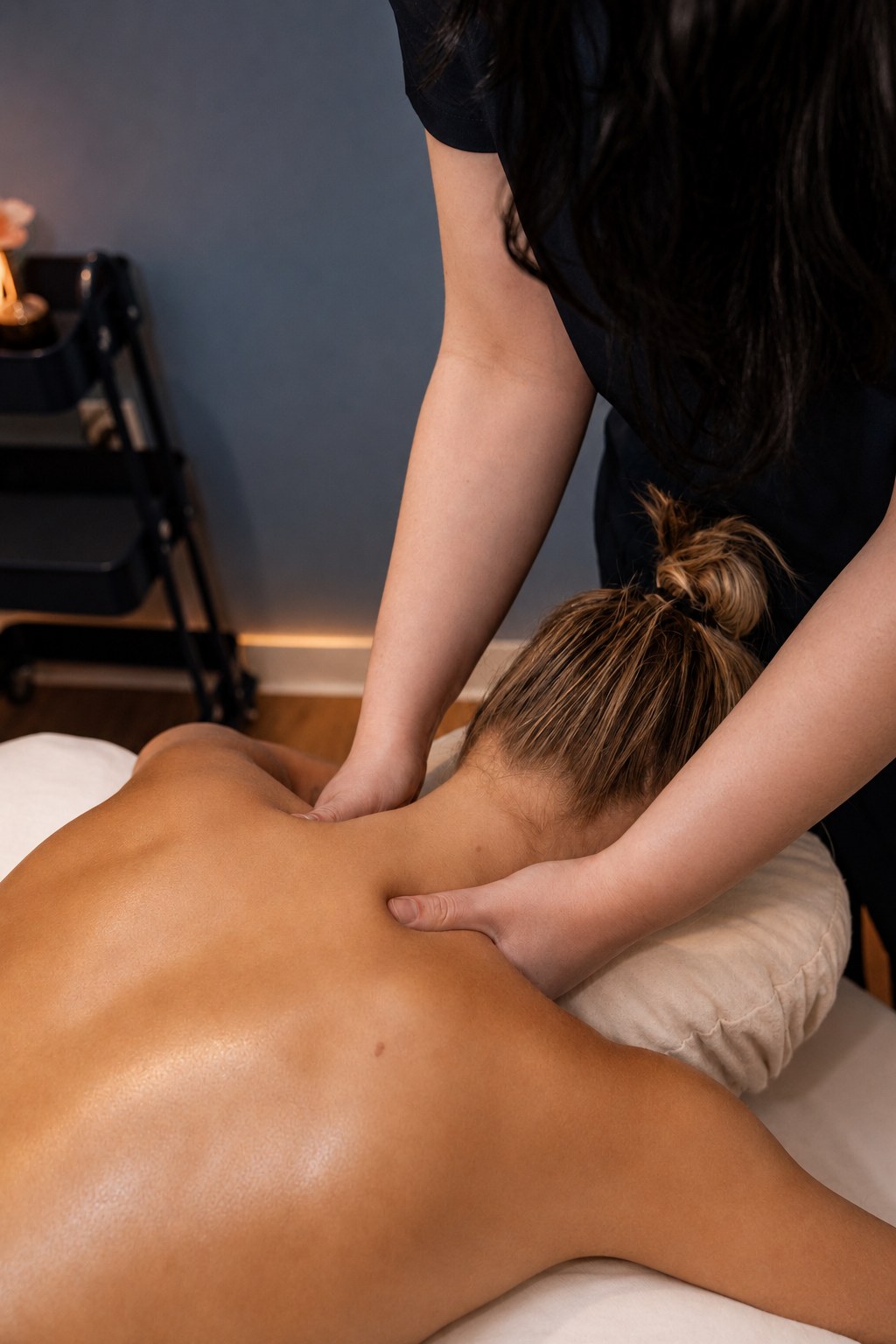
Sports massage at Life Massage and Wellness in Portsmouth, NH is bodywork with a job to do. Where a spa massage aims only to relax, a sports massage session is planned around how you train, how you move, and where your body is asking for help. Runners logging miles along the waterfront, lifters working through a strength block, golfers, paddlers, skiers, and weekend hikers all arrive with different patterns of tension, and each session is shaped to match.
Our licensed therapists combine targeted deep work, assisted stretching, and circulation-focused strokes to ease the muscle groups you rely on most. The goal is simple: help you recover faster between efforts, restore the mobility that hard training slowly steals, and catch small problems while they are still small.
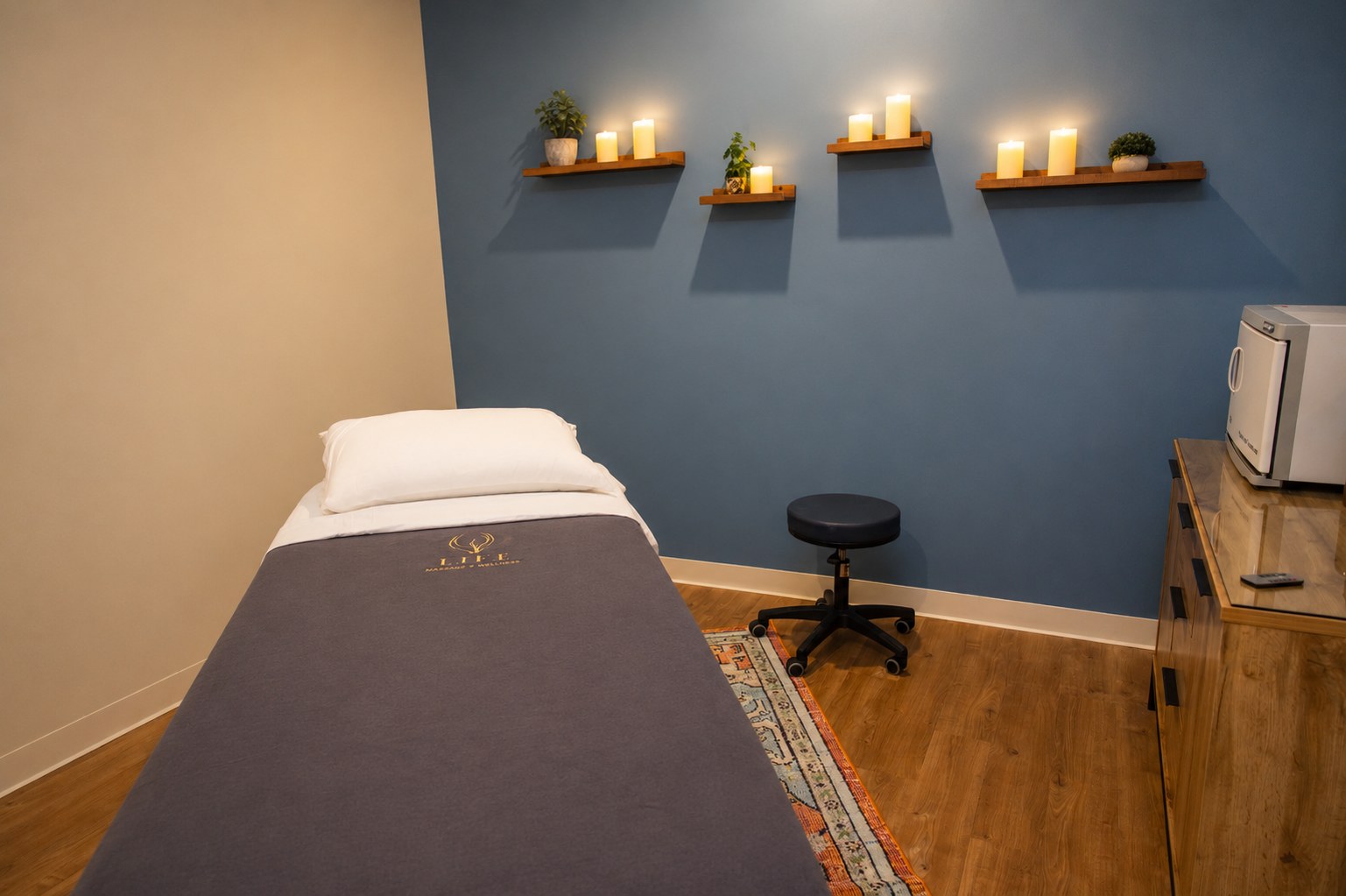
You do not need a race number to benefit. If your work keeps you on your feet, your hobby keeps you on a court, or your week simply demands a lot from your body, sports massage gives that effort somewhere to land. Sessions run 60 or 90 minutes in our calm, candlelit Portsmouth studio, and every minute is tailored to your goals.
Whether you are chasing a personal best, coming back from a long layoff, or simply determined to keep doing the things you love without paying for them the next morning, this page walks you through exactly what sports massage is, how it works, and what to expect when you visit us.
Five reasons active people in Portsmouth keep sports massage on their training calendar.
Eases the heaviness and soreness that follow hard efforts.
Restore range motion in hips, shoulders, and ankles.
Finds tight, overworked tissue before it becomes a setback.
Keeps hard-working muscles supple season after season.
From flushing strokes to focused elbow work, always your call.
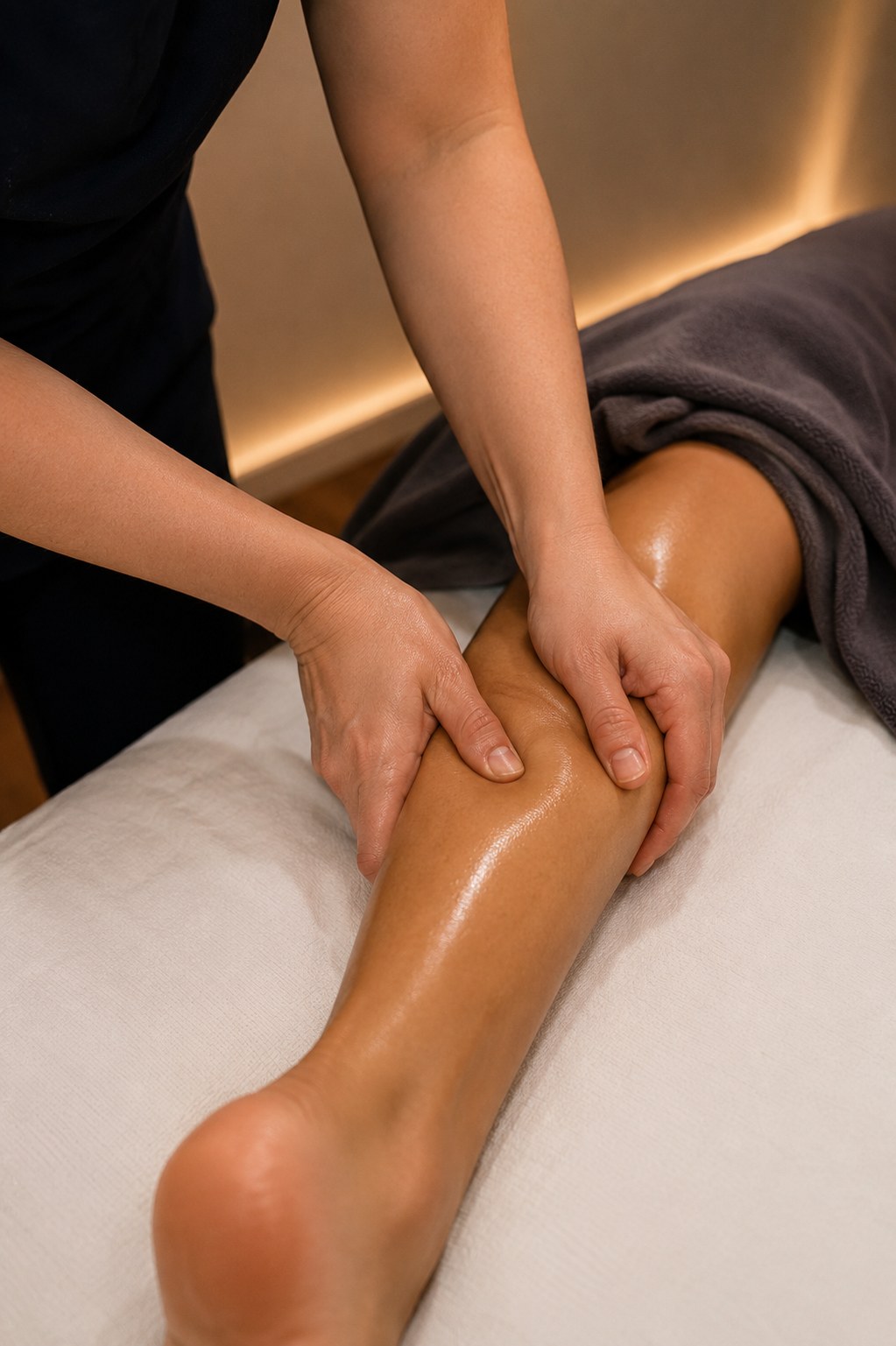
Sports massage is a results-oriented form of massage therapy developed around the needs of active bodies. It blends techniques from deep tissue massage, Swedish massage, assisted stretching, and targeted friction work into sessions planned around your activity, your training load, and your goals. Rather than following one fixed routine, the therapist selects the right tool for each tissue: long flushing strokes to move fluid through fatigued legs, slow sustained pressure to soften a stubborn knot in the shoulder, gentle stretching to coax a guarded hip back toward its full range.
The work centers on the muscles and the fascia, the connective tissue that wraps every muscle like a sleeve. Repetitive training can leave fascia dehydrated and stuck, which feels from the inside like stiffness that stretching alone never quite reaches. Skilled manual pressure warms and mobilizes these layers, encourages local circulation, and reminds the nervous system that a chronically braced muscle is allowed to release. That last part matters more than most people expect: a great deal of tightness is not shortened tissue but a protective holding pattern, and calm, deliberate handwork is one of the most direct ways to switch it off.
A common misconception is that sports massage must hurt to work. It does not. Effective pressure is firm and specific, and it can be intense in a satisfying way, but pain that makes you brace defeats the purpose. Another misconception is that it is only for competitive athletes. The same techniques that help a marathoner recover serve a nurse who walks twelve-hour shifts or a contractor who swings a hammer all day.
It also is not simply a harder version of a regular massage. Depth is one dial among many. A skilled sports session may spend twenty minutes on light, brisk work that leaves your legs feeling springy, then ten slow minutes on a single stubborn spot in the hip. What you are paying for is judgment: knowing which tissue needs which touch, and when. That judgment is built from anatomy training, years of hands-on experience, and honest attention to how your body answers on the table.
What separates sports massage from a general relaxation session is intent. Every stroke has a reason. Effleurage, the long gliding stroke, warms tissue and moves fluid. Petrissage, the kneading stroke, lifts and wrings muscle to break up congestion. Cross-fiber friction works across the grain of a tendon or muscle to address specific adhesions. Compression and direct pressure quiet overactive trigger points, and proprioceptive stretching techniques use gentle contract-and-relax cycles to win new range of motion the body is willing to keep.
Timing shapes the session too. Work scheduled before an event stays brisker and lighter, priming muscles without leaving them wrung out. Work in the days after a big effort emphasizes drainage and gentle mobility while soreness settles. Maintenance sessions between events go deepest, addressing the patterns your sport writes into your body over months: the rounded shoulders of a cyclist, the tight hip flexors of a desk-bound runner, the guarded low back of a lifter.
Recovery is where most of the benefit compounds. Training creates controlled stress; adaptation happens in the hours and days afterward, and it happens best in a body that is circulating well, sleeping well, and not stuck in low-grade guarding. Massage supports exactly that window. Clients often report sleeping more deeply the night after a session and feeling noticeably fresher on their next hard effort, which is why so many build it into their calendar rather than saving it for emergencies.
At our Portsmouth studio, your therapist draws from this full toolkit rather than applying one formula. That is the real definition of sports massage: not a single technique, but a conversation between skilled hands and a body in training.
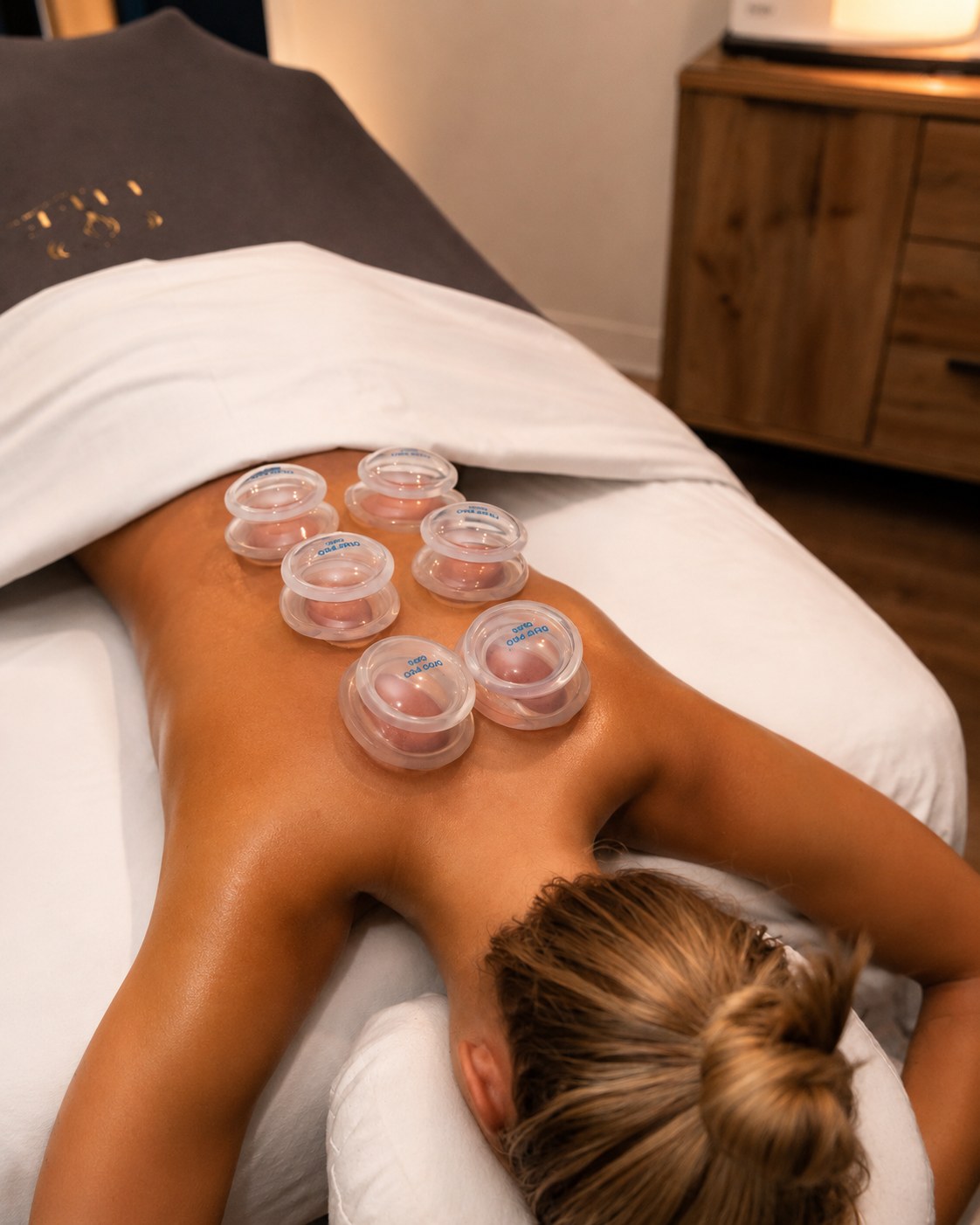
Every session begins with a short assessment. Your therapist asks what you do, what is bothering you, and what you want from the hour: fresher legs, a shoulder that stops complaining, or simply a body that moves like it used to. A quick look at how you stand and move often reveals the pattern behind the complaint, because the spot that hurts is frequently not the spot that started it.
On the table, pressure is a dialogue, not a demand. Your therapist works into tissue gradually, watches how it responds, and checks in as the depth builds. Muscles release best when the nervous system trusts the pressure, so the right depth is the one your body accepts without bracing. Speak up at any moment; adjusting is part of the craft, never an interruption.
Muscle responds to that patience in a predictable way. Warmth and circulation arrive first, then the guarded tissue begins to give, and finally range of motion opens without anyone forcing it. Rushing any of those stages produces bracing rather than release, which is why an unhurried therapist gets deeper results than an aggressive one. What you take home afterward matters just as much: water, easy movement, and a lighter next twenty-four hours will carry the work further than any single technique on the table.
Sports massage is not a medical treatment, and we never promise cures. It is, however, a service many clients seek out for the everyday consequences of an active life. If you recognize yourself in the list below, a session is a sensible first step, and your therapist will tell you honestly if what you describe belongs with a physical therapist or physician instead
No mystery, no awkwardness. Here is the whole arc of a sports massage visit at our Portsmouth studio, from the front door to the drive home.
We talk through your training, any tender spots, and what you want the session to accomplish. First visit paperwork takes five minutes; arriving ten minutes early keeps everything unhurried.
You undress to your comfort level and rest under a sheet on a warm table. Only the area being worked is ever uncovered. Our oils are water soluble and made not to stain.
Sixty or ninety minutes of focused bodywork, with pressure checked and adjusted as you go. Expect a mix of gliding, kneading, direct pressure, and stretching, weighted toward the areas that need it most.
You leave with simple guidance: drink water, move gently, and expect a day or so of mild, workout-like soreness after deeper work. A warm shower that evening helps.
One practical note on scheduling: if you have a race or big event coming up, book your deeper work at least three or four days out, and save the day before for rest or very light flushing work. If you are unsure, call us and we will help you place the session where it will do the most good.
Our studio sits at 95 Brewery Ln, Unit #17, minutes from downtown Portsmouth with free parking right at the door. No circling for a spot after a workout, no downtown meters. We are an easy stop on the way home from the gym, the trails, or the office, and we are open seven days a week with evening hours, because training schedules rarely respect business hours.
Portsmouth is a town that moves: road runners on Middle Street, rowers on the Piscataqua, hikers heading north on weekends, and a gym on every corner. Our therapists know this community because they work on it every day, and several bring a particular love for deep, detailed sports work. Clients come to us from across the city and from Rye, Greenland, Newington, Dover, Newmarket, and just over the bridge in Kittery.
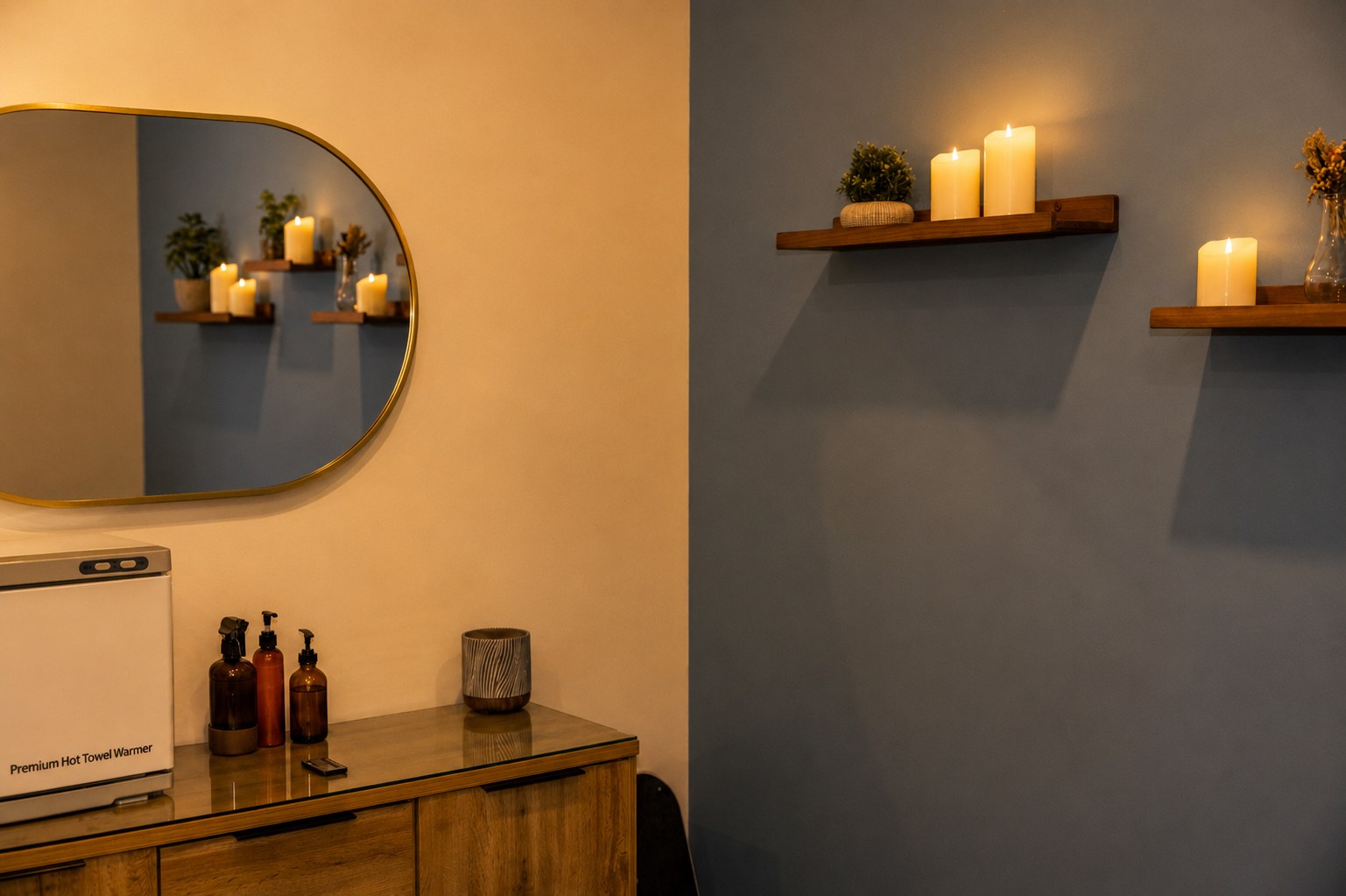
What makes the experience ours is the atmosphere. Plenty of places offer firm pressure; far fewer pair it with a room you genuinely do not want to leave. This is serious bodywork without the clinical chill: candlelight, warm tables, water-soluble oils, and a quiet space where your only job is to breathe. Strong hands, soft landing
A membership includes one massage each month from $105, with member rates on every extra session, hours that roll over for six months, and no long-term commitment. For anyone training year-round, it is the easiest way to make recovery routine and save on every visit.
Know someone chasing a marathon PR or nursing a stubborn shoulder? A gift card covers any service at either studio, in any amount, and takes two minutes to send online.
Still have a question? We’re happy to talk it through before you book.
It depends on your training load. Many active clients settle into a rhythm of every three to four weeks for maintenance, moving to every one to two weeks during heavy training blocks or race season. If you are new, start with a single session, see how your body responds over the following week, and let your therapist help you find the cadence that keeps you feeling consistently good.
After deeper work, some people feel a mild, workout-like soreness for a day or two; lighter recovery-focused sessions usually leave you feeling loose right away. Drinking water, moving gently, and warmth all help. If you ever feel more than mild soreness, tell your therapist at your next visit so the pressure can be tuned; the right depth for you is exactly what we want to find.
Your training does the breaking down. Let us handle some of the building back up.
Therapeutic massage and specialty wellness in Portsmouth, NH and Amesbury, MA.
Portsmouth: 603 373 8780
Amesbury: 978 792 5201
Sunday 8:00 am – 5:00 pm
Monday – Thursday 8:00 am – 7:00 pm
Friday 8:00 am – 6:00 pm
Saturday 8:00 am – 5:00 pm
Sunday Closed
Monday – Thursday 9:00 am – 8:00 pm
Friday 9:00 am – 6:00 pm
Saturday 9:00 am – 5:00 pm
Sunday 8:00 am – 5:00 pm
Monday – Thursday 8:00 am – 7:00 pm
Friday 8:00 am – 6:00 pm
Saturday 8:00 am – 5:00 pm
Sunday Closed
Monday – Thursday 9:00 am – 8:00 pm
Friday 9:00 am – 6:00 pm
Saturday 9:00 am – 5:00 pm